

Home
Ideodyssey
a journey in ideas


Contents
Page
Current
Chapter:
10
Lessons
From
Writing


Play
TRACK 12
Previous
Chapter
Appendices

rigins
Writing
of

𑁧𑁦
Lessons From Writing
Having taken a glimpse at the history of the world’s writing and number systems, there are two key takeaways that I believe are important to consider:
1: The evolution of writing systems gives us some important epistemological and ontological insights. Many of the ideas that we take for granted, rather than simply being the epiphanies of intelligent people, have ancient genealogies with long evolutionary histories. And while they have fundamentally universal characteristics, they are simultaneously unique cultural byproducts.
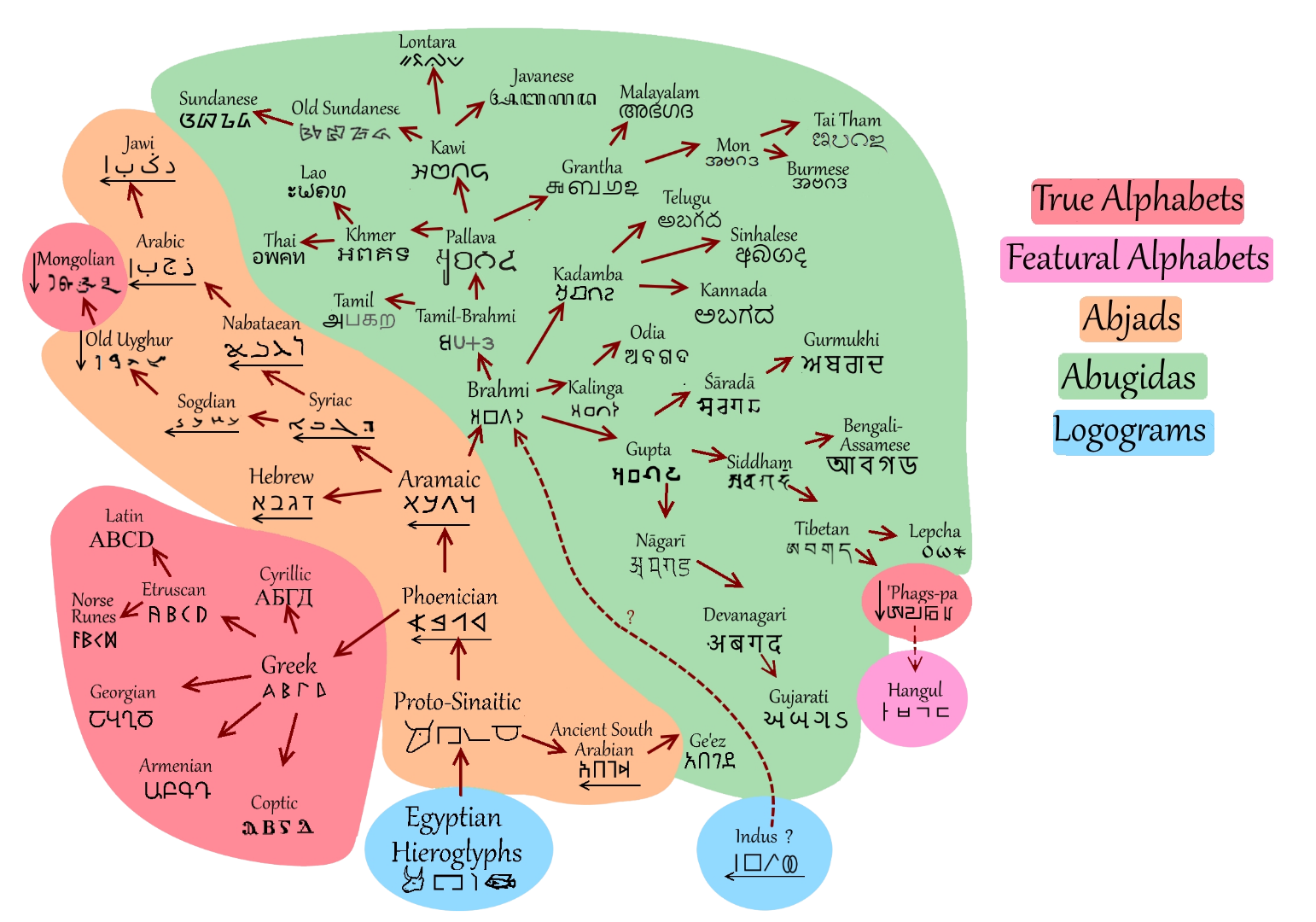
2: Writing systems evolve in biologically-analogous terms. That is, they inherit traits from their ancestors, they spread, they mutate, they compete and they go extinct. Certain writing systems are dominant leading, to them being standardised, both organically and by design. Some writing systems even go on to homogenise a ‘linguistic eco-system’ with both practical benefits, but also societal detriments.
1. Epistemological & ontological insights
Epistemology
Writing and number systems were not invented one day by geniuses who mulled over the “problem” of not already having them (as if they could know what they were missing…). Instead, they evolved through long evolutionary processes and cultural transmission. No organic writing or number system began its existence in an abstract form. Constructed systems can of course begin in this form, but not without external prior influence. In other words, the concept of writing was not an a priori deduction (based on reason alone) but a posteriori (based on observation), emerging almost “by accident”. To have invented writing in its abstract form without prior exposure to the concept would be like inventing the lightbulb before the discovery of electricity. The invention of a concept based on yet-unconceived precepts is essentially impossible. This is why the term ‘evolution of’ rather than ‘invention of’ writing is usually more appropriate. When talking about more recent systems like Cyrillic or Hangul, conflation of the two is more forgivable. But even in the case of constructed scripts, they are mostly based on, or inspired by, existing principles of writing. Therefore, their invention was more like inventing a new form of lightbulb (perhaps the LED) rather than the concept of the lightbulb itself. This concept of an epistemological genealogy has been touched on by great thinkers such as Friedrich Nietzsche and Michel Foucault.


Intro
What
Is
Writing?
Birthplace
of
Writing
Children
of
Egypt
Cuneiform:
"Neanderthal
Script"
Oracle
Bones
Extinct
Scripts
Invented
Writing
Punctuation
&
Symbols
Number
Systems
Lessons
From
Writing


↑
Click here to pause slideshow
← Click image to enlarge
Tip: Hover cursor over image to pause slideshow 👆🏻
But the evolutionary process of writing was not purely linear and in fact involved a series of what Thomas Kuhn coined as ‘paradigm shifts’; that is, fundamental changes in underlying concepts. As we explored in chapter 1, in a universally-consistent process, organic writing starts its evolutionary journey as simple depictions of the real world in the form of pictograms (essentially artistic representations that become standardised over time) before evolving into more abstract ideograms and logograms and eventually into phonograms, completely detached from their original graphic representations. Of course not every system of proto-writing evolved into full writing, but those that did usually followed the same process. The same can be said for numerals, where almost every historical system (other than alphabetical numerals) started as tally marks. Many punctuation marks and symbols share the same evolutionary process too, starting from markings with literal meanings or banal functions such as directing oration, and ending as abstract ones, often with complex functions like signalling grammar and morphology.
Ontology
The fact that writing follows a more-or-less universal evolutionary path, and which nevertheless results in the immense plurality of forms, illustrates its ontological characteristics as both deterministic in its core structures and contingent in its expressions. As Meletis and Dürscheid state, “Regardless of how diverse they appear superficially, at their core, writing systems share certain structural and functional features.”¹ The reasons for why writing systems have taken on so many superficial forms is due to many linguistic, cultural, historical and environmental factors.
Influences on script development
As we have seen throughout this piece, culture and language greatly impacted the formation of scripts through their phonology and the purpose of their use (religious, economic, social, etc). Similarly, the writing method and medium that a script historically utilised, stemmed largely from practical considerations, which in turn determined the typography and writing direction among other things. Akkadian cuneiform for example was written with a cuneus on clay readily accessible from the banks of the Tigris and Euphrates. It was written left to right, probably to prevent the predominantly right-handed scribes smearing the clay as they wrote. Egyptian hieroglyphs were first engraved or painted on stone in multiple directions, and then written using a calamus (reed pen) on papyrus paper made from the pith of a wetland sedge that grew in the Nile.² Demotic was later written mostly on papyrus, right to left.³ Papyrus later spread to most literate societies in the Mediterranean. The Greeks later invented a more durable medium known as parchment, made from dried animal skins in the 2nd c. CE. This became the preferred medium in neighbouring civilisations for texts intended to perpetually last.⁴ Chinese was originally engraved into animal bones before being painted top-to-bottom, right-to-left on long bamboo strips strung together or pieces of wood.⁵ The Chinese are also credited with the later invention of paper around 100 CE, made from bark or plant fibres. Paper eventually made its way to Europe in the late Middle Ages via the Muslim world. Wood pulp was later used during the Industrial Revolution as the principal fibre for paper.⁶ Myan glyphs were mostly chiselled into stone or painted/written with a quill onto amate, made from the bark of the fig tree. It was written left to right, top to bottom.⁷ Rongorongo was mostly carved into wood boustrophedon.⁸ Once the preferred writing direction of a script became standardised, it often stuck and was passed down to child writing systems, despite later innovations in media and implements.


Knowledge transmission
The evolution of knowledge is piecemeal and built upon previous ideas that are within the existing bounds of human understanding. An idea too far outside these bounds is simply not comprehensible due to the limits in human cognition and perception. Human ideas are, therefore, mostly transmitted culturally. Hence why the wheel, a totally common-sense device to us now, invented more than 5000 years ago, wasn’t implemented everywhere. Neither sub-Saharan Africa, nor Australasia or the Americas, culturally isolated by thousands of kilometres of ocean, managed to get the idea off the ground (although it must be admitted that other factors such as technology limitations and environment also played a part in its implementation in parts).⁹ It is likewise not logical that human symbols be created in purely abstract forms without an original real-world referent to ground its meaning within the realm of human experience. At least not if you want anyone to understand them… In the realm of linguistics this is evident in the fact that the majority of modern writing systems are derived from one source of semasiographic pictograms (Egyptian proto-hieroglyphs), while many cultures didn’t invent any form of writing (e.g. the Incans, Indigenous North Americans, Australian Aboriginals, most of sub-Saharan Africa, etc.). The concept itself was simply too alien to them, and neither necessitated by the demands of their societies nor encouraged by their environment.
Watch: The Idea of Cultural Transmission | BBC Radio 4
Click here →
With these facts in mind, we can better appreciate just how drawn out and tedious the evolution of the ideas that we take for granted really are. It furthermore grounds us and prevents the temptation to conceptualise knowledge in a mythical creatio ex nihilo or revelatory sense (albeit with the human mind as architect rather than a supernatural being). Any claim that an idea “just came to someone” should, therefore, be treated with the utmost scepticism.
2. Biological Parallels
As we have seen, the forms of writing that we take for granted today, have lengthy genealogies. They were not created from thin air or as the gifts of gods like the ancient mythologies profess, nor were they created in cultural vacuums. In fact, writing systems evolved in many ways analogous to biological evolution. To use biological terms, writing systems evolve in a process analogous (although not identical) to that of speciation i.e. through mutation and mixing. Just as genes are transmitted through a population through interbreeding, so too are ideas spread through cultural transmission – a concept referred to as memetics, coined by geneticist Richard Dawkins.
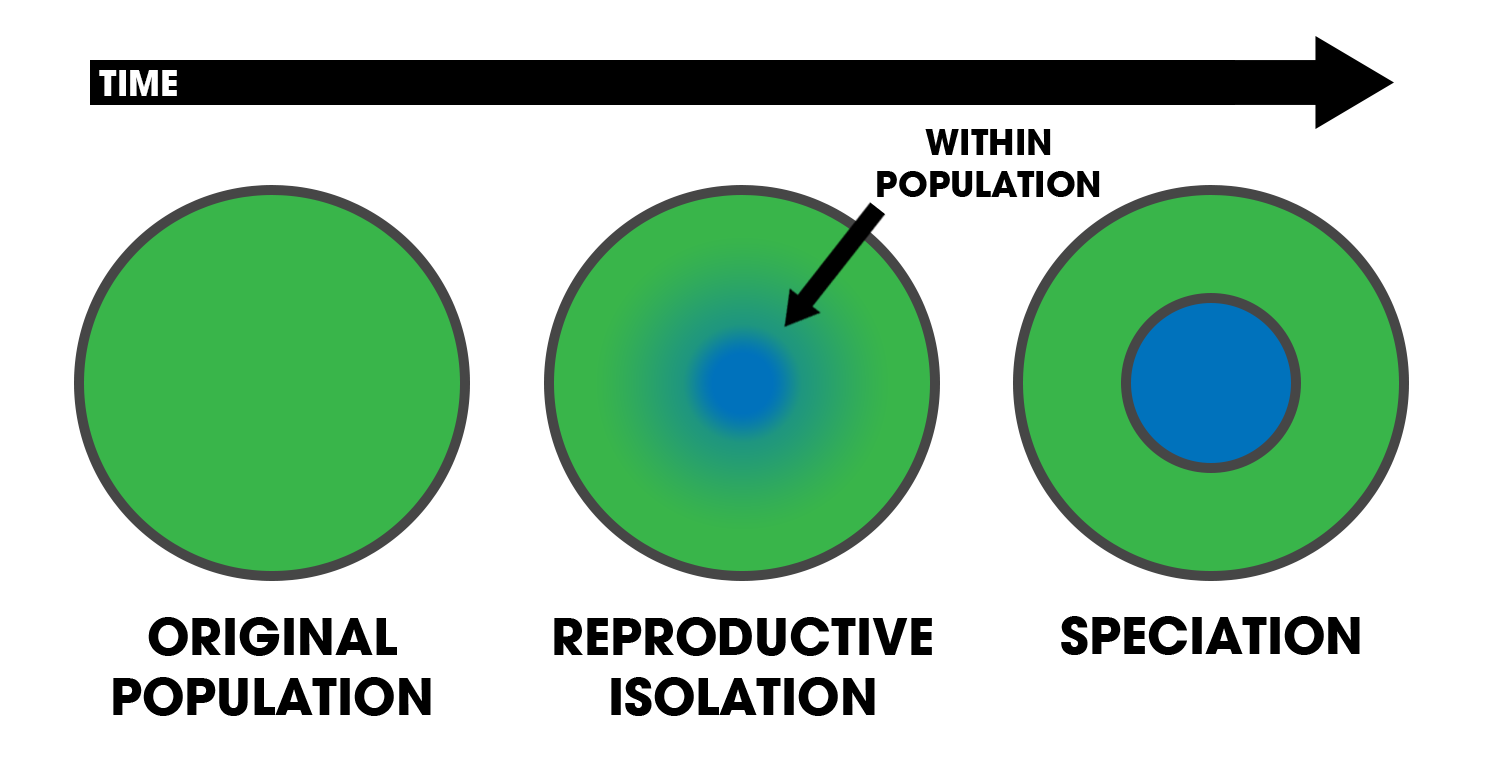
Speciation
Sympatric
Several types of biological speciation are analogous with writing systems. The first is sympatric speciation. This occurs when a new species emerges from within a central population while retaining close contact. Consider as a parallel, Hieratic and Demotic Egyptian evolving besides their parent hieroglyphs or Akkadian cuneiform evolving alongside its parent Sumerian cuneiform.¹⁰
Watch: Daniel Dennett: Memes 101 | Big Think
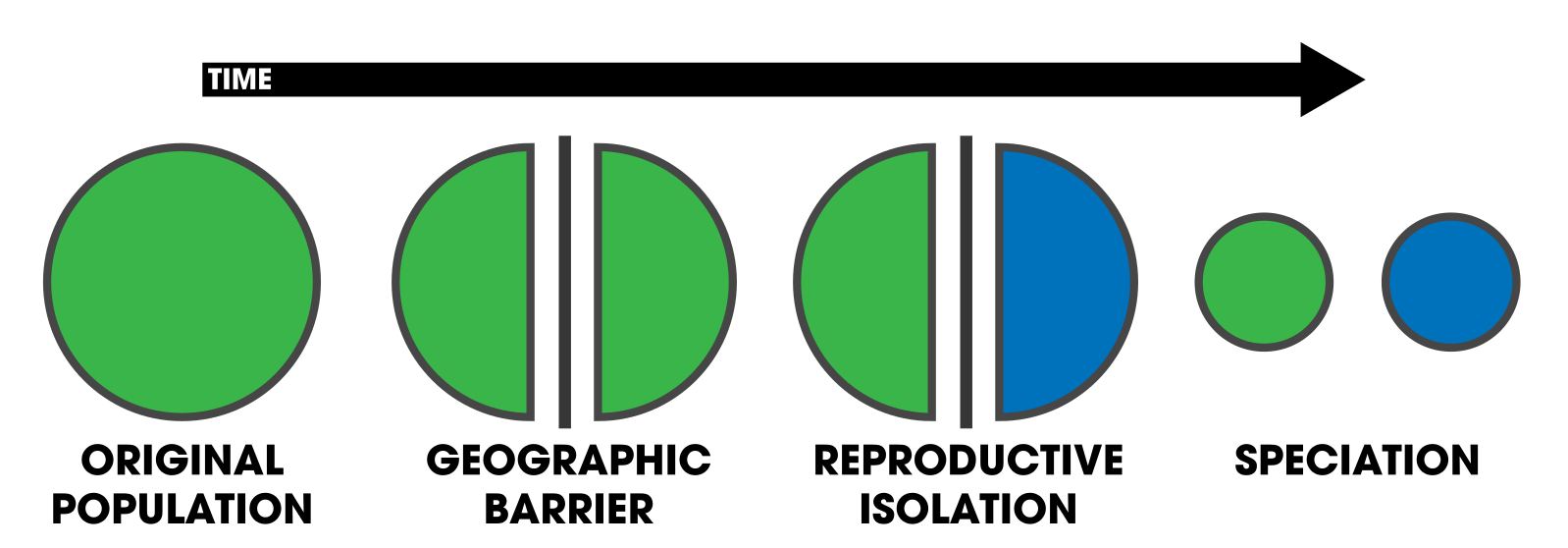
Allopatric
Allopatric speciation occurs when two major groups within a species become geographically isolated from one another preventing gene flow and causing genetic divergence. Consider as a parallel Greco-Iberian. Archaic Greek spread from Greece to Iberia by colonists, where it evolved in isolation, separated by the Mediterranean Sea. Likewise, Euboean Greek was isolated on the Italian peninsula, separated from its homeland by the Adriatic and Ionian Seas, evolving into Old Italic.¹¹
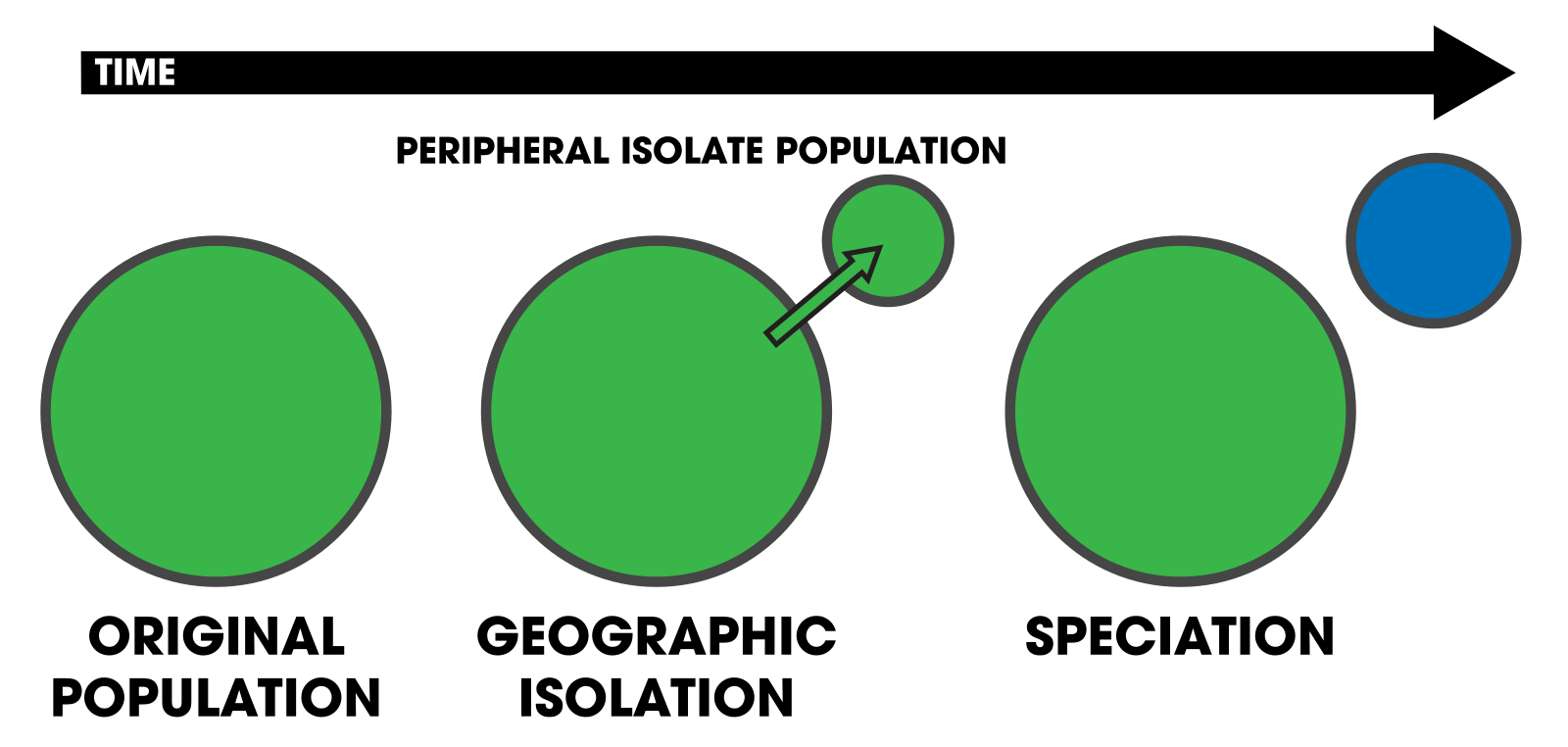
Peripatric
Another form similar to allopatric speciation is peripatric speciation. This is when a small group is geographically isolated from the central population and evolves into a new species due to it having less trait diversity. Consider as a parallel the runic alphabet (futhark), a form of Old Italic which made its way to Central Europe where it evolved in a very different way, or the Icelandic alphabet which still uses the letters æ, Þ and ð despite its ancestral home of Scandinavia dropping them long ago, as did Britain.¹²
Centrifugal
Centrifugal speciation occurs when a new species is formed in isolation from the central population when its it geographical range is reduced. Consider as a parallel the descendants of Aramaic. Imperial Aramaic was first spread from the Levant to India by the Achaemenid Empire, but after Alexander’s conquest of the empire and the replacement of Greek as the administrative language, different regions were no longer communicating in Aramaic to the same degree. This led to them developing their own local variants of Aramaic script for their own languages which eventually became a host of separate scripts including Hebrew, Arabic, Syriac, Parthian and Brahmi.¹³

Parapatric
Lastly, parapatric speciation occurs when a species is spread out over a large geographical area leading to mutations despite a continued gene flow. This could be compared to the Latin script mutating into its various forms in Europe with different letter ranges and diacritics.¹⁴

Hybridisation & "Genetic Modification"
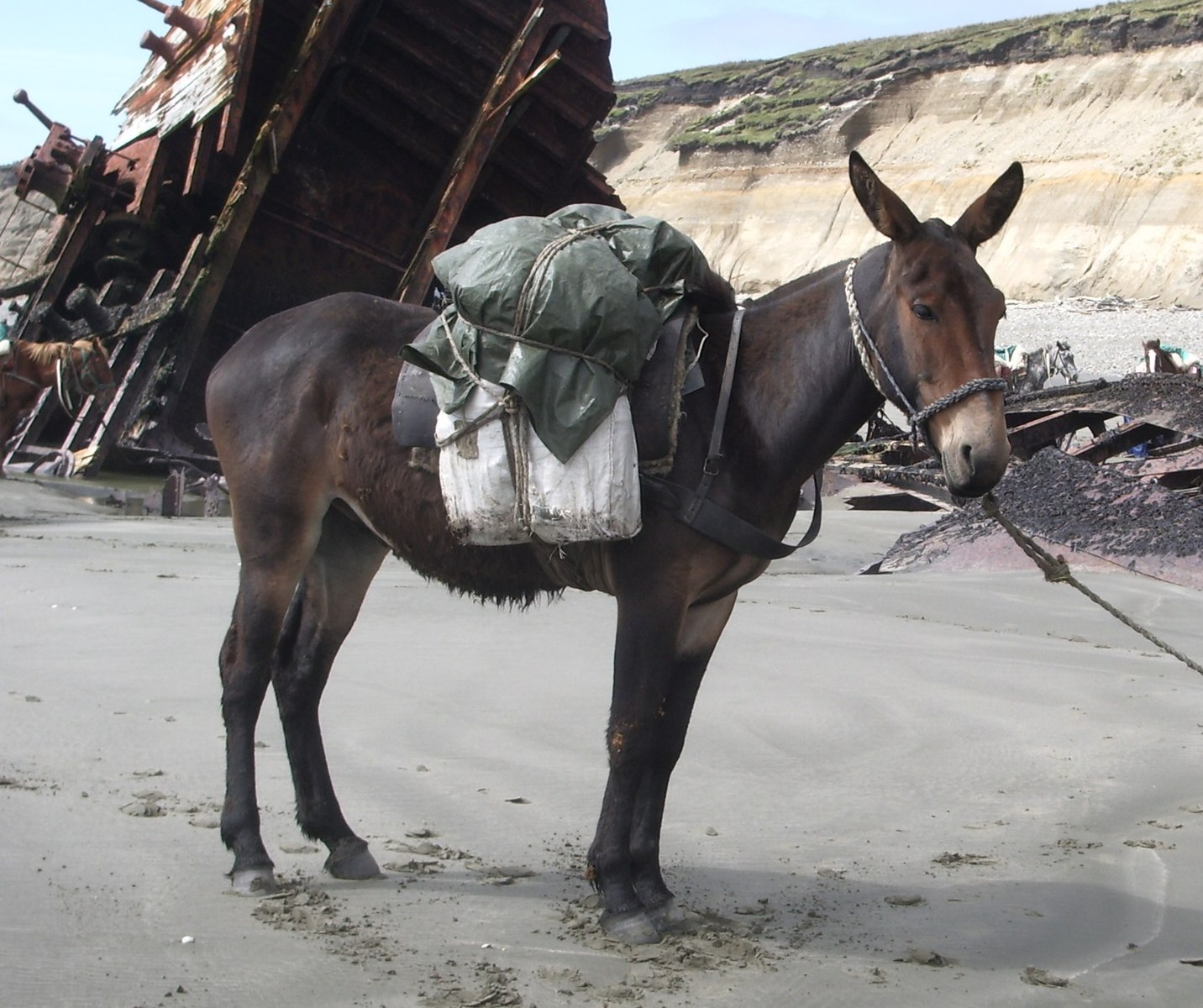
Hybridisation is the mixing of two separate distinct species, and occurs with writing systems as it does in nature. Consider Coptic, a hybridisation of Greek and Demotic, or Alaskan Yugtun, a hybrid of Alaskan pictograms and Latin. Hybrids tend to have a dubious existence. Most, even though logical in theory, have failed to gain traction or compete with organic scripts that have a more solid cultural foundations. Like the mule (the hybrid of a horse and donkey), many could be said to be “sterile” not being able to successfully replicate in a memetic sense.
Some scripts, rather than the result of two scripts merging wholesale, are instead the result of the combining of specific traits from different systems. This would is analogous to genetic modification. Consider Korean Hangul, which merges the phonetic letters of an alphabet with the syllabic nature of an abugida in its syllabic units with Siniform blocks resembling Chinese characters (originally written vertically like Chinese). Nowadays, there are many systems engineered in this way from Osage to Shavian.
Watch: Speciation: An Illustrated Introduction | Cornell Lab of Ornithology
Competition
As the theory of memetics would assert, scripts and indeed entire writing systems “compete with each other” to be replicated, just as an organism competes for its genes to be replicated. Particular writing norms become standardised (dominant) due to their ‘fitness advantage’ (on account of their efficiency or practicality), or stronger cultural/ political influence.
Standardisation within languages
Standardisation of Greek
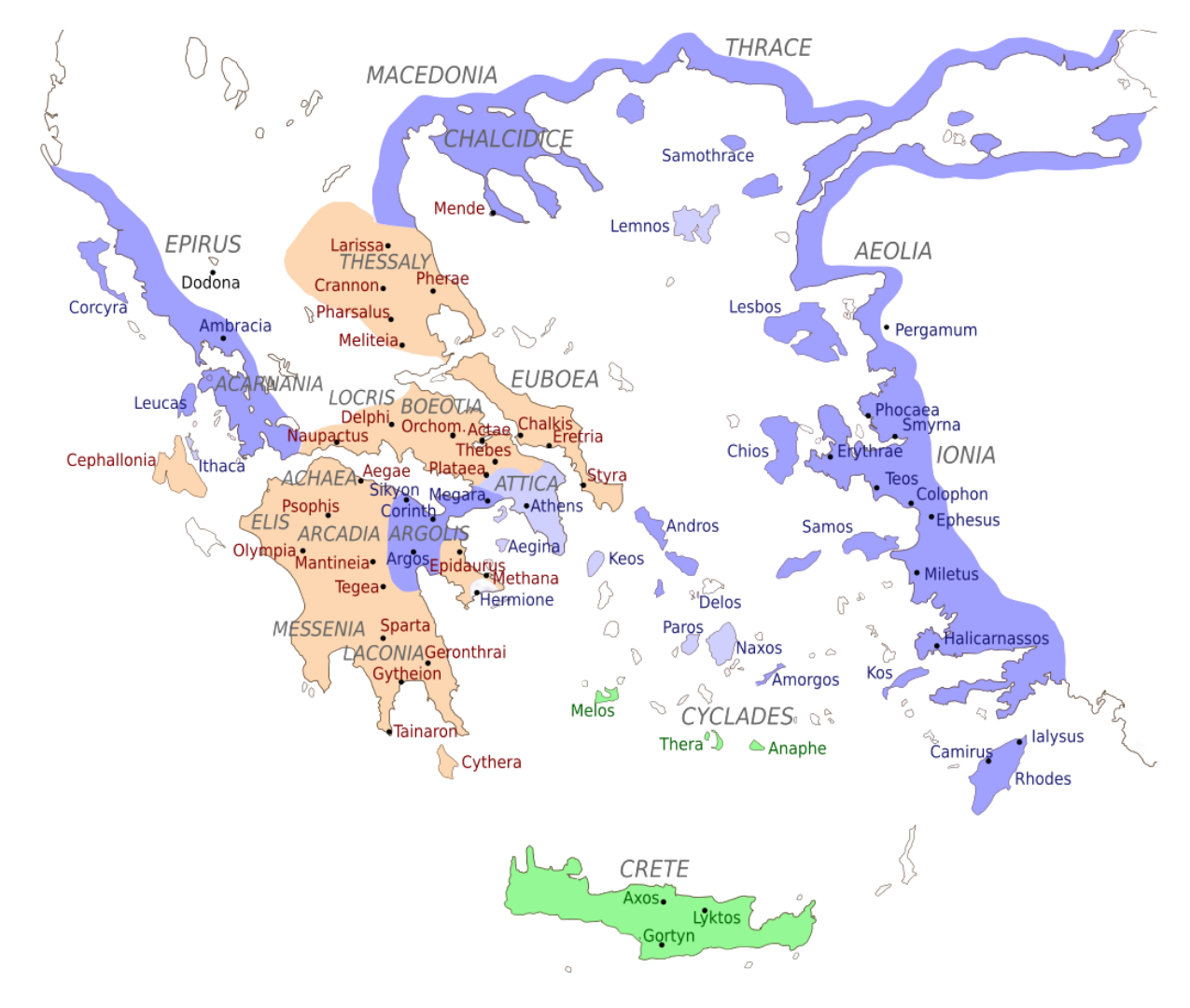
Early on in their development, most scripts didn’t have standardised forms, with a multitude of variants “competing” with one another. They were often written in a multitude of directions and as we saw with proto-Sinaitic, didn’t have a standardised letter order or indeed even a standardised set of letters. But standardised forms did eventually emerge; sometimes due to practical purposes such as dialect phonology, but mostly it was through cultural and political influence. The Archaic Greek alphabet for example had variants all over the mediterranean. Athens, originally used a western variant known as Attic. However, by the middle of the 4th c. BCE they had adopted the Ionian variant (centred on Miletus) which had a more consistent vowel system.¹⁵ Athens also culturally identified with Ionia, claiming lineage to the mythical King Ion, and being the source of the Hellenistic colonisation of Ionia. This resulted in closer Ionian ties.¹⁶ In the 5th century BCE, Athens solidified itself as the most powerful and influential city-state in the Hellenistic world with influential works of classical Greek literature, such as those of Herodotus, Plato and Aristotle primarily written in Ionian Greek. This helped cement the Ionian Greek alphabet as the standard within the Hellenistic states and is the standard that the modern Greek alphabet derives from.¹⁷
Standardisation of Latin
The standardisation of scripts in other places follows more or less the same pattern. The standardisation of lower-case letters in Latin, for example, derives from Carolingian minuscule script, the Carolingians being a very powerful cultural influence in Western Europe in the early Middle Ages.¹⁸ English orthography has also gone through its own process of standardisation. After the Norman conquest of England in 1066 CE, the English Latin Alphabet was further standardised with Old English letters slowly being dropped to conform to Norman conventions.¹⁹ Spelling norms did also change after the Norman conquest, such as the cw- to qu- shift, but up until the Middle Ages, it was more or less a spelling and punctuation free-for-all. With no institutional authority on the matter, people were free to spell and punctuate as they saw fit. This all changed, however, with the introduction of the printing press. The printing press demanded standardised conventions out of practical concerns, and with printing being in the hands of a small number of printers, they had great influence over what those conventions would be. Johannes Heynlin introduced the first printing press to France in 1470 and in 1471 wrote the first treatise on punctuation.²⁰ The printing press was later introduced to England in 1476 by William Caxton. Caxton and other early English printers had to choose which typographical, spelling and punctuation conventions to use for their printed texts, often showing an unsurprising bias toward southern norms used by the nobility.²¹ But even after the invention of the printing press, there was still no formally-correct spelling of a word or even names. William Shaxsper famously had six ways to spell his own name.²²

Holy book
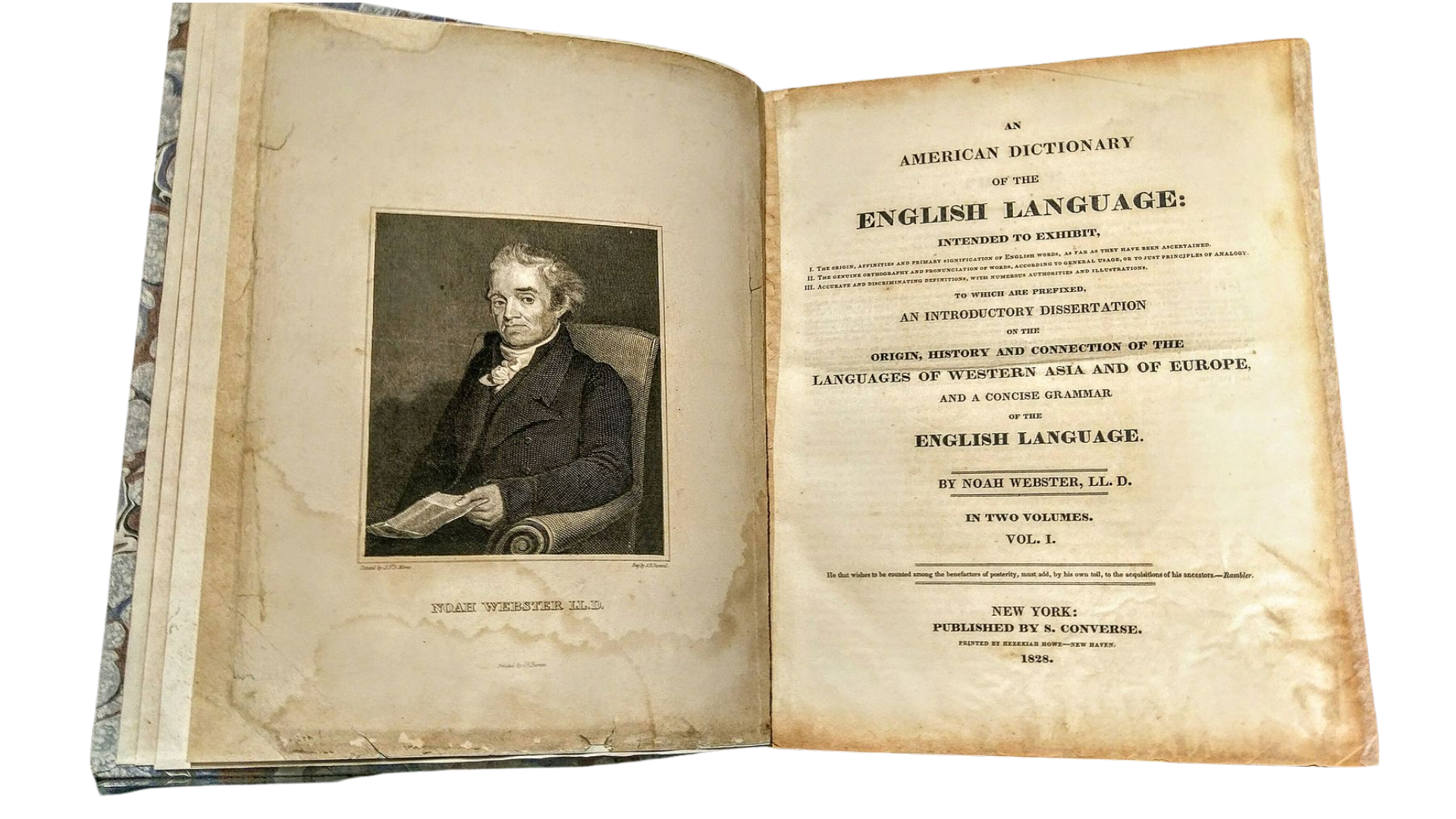
But this all changed with the introduction of the dictionary. The first English dictionary was published by Samuel Johnson in 1755. His dictionary offered for the first time, formalised spellings of British English including words like colour, centre and traveller which now differentiate it from its cousin across the pond.²³ In the early 19th century Noah Webster published the first American English dictionary with his own spelling conventions (based on what he saw as practical) including of course color, center and traveler.²⁴ With the rise of public education in the Anglosphere in the mid to late 19th century, standardised English was institutionalised and officially taught in schools. Since then, orthography standards haven’t changed a whole lot, although the rise of the internet and American cultural influence has led to increased adoption of American standards. Some Commonwealth countries such as Australia, which have historically used British conventions, are seeing greater acceptance of American ones. For example, 'past participles' ending in -ed like dreamed and learned (vs. dreamt and learnt) and the serial comma (a comma before the last item in a list).²⁵
Technology
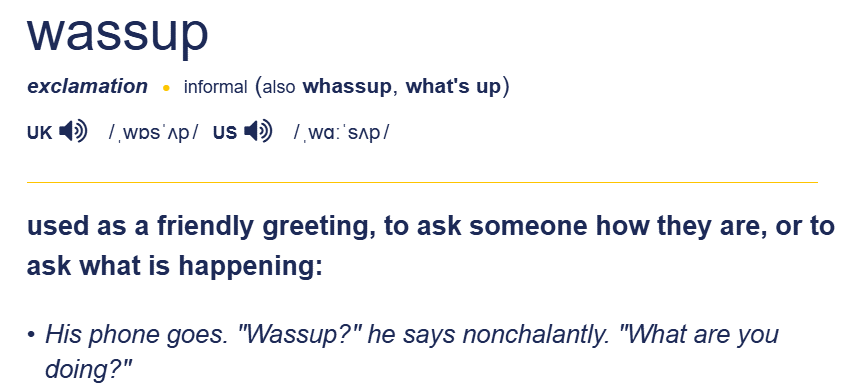
Technology and the internet have led to a quasi-democratisation of writing, with less obedience to ‘rules’ in orthography and the remarkable return of the pictogram (a.k.a. the emoji). Writing has come full circle 😉. But while the purism of the elitist Victorian era grammarians who sought to impose their preferences on the wider population is mostly a remnant of the older generations, some still cling doggedly to the conventions of the past. There are in fact still actors that would seek to wield institutional authority over writing such as university style guides, language associations and educational departments. France even has a whole academy dedicated to dictating ‘correct’ French language conventions (the Académie Française). It is yet another example of how soft power (or lack thereof) can influence the evolution of writing.
Standardisation (dominance) of writing systems
The examples above were of standardisation within writing systems. But the standardisation of writing systems i.e. making one system the standard or dominant system also occurs, often in tandem with an associated language. Sometimes these scripts fill a void, where there is no existing script, in the case of illiterate cultures, and sometimes scripts are adopted by choice due to it better serving the needs of a language. Far too often, however, it is the result of so-called linguistic imperialism. That is, a dominant language (or script) being imposed on another people.
Dominance of Aramaic & Greek
Aramaic was standardised as the imperial script of the Persian Empire in place of cuneiform, largely due to the fact that Aramaic was the lingua franca, but also because cuneiform (even the Old Persian semi-syllabic variant that Darius I had implemented uniquely for Persian) simply wasn’t as appealing. In the realm of administration and commerce, the Aramaic script was far more practical and efficient. Even when the Greek alphabet became the official script of administration after the conquests of Alexander the Great, the Aramaic script remained commonly used alongside it. After Greece’s conquest by the Romans, Greek remained the lingua franca in the eastern half, rather than Latin, and by the time the Romans had annexed the former Seleucid territories in the Levant, Greek was entrenched among the Semitic peoples there as the administrative and prestige language, along with its script. These areas, had after all been ruled by the Greeks for several centuries. Aramaic, did however, remain influential as a cross-cultural language and script.²⁶
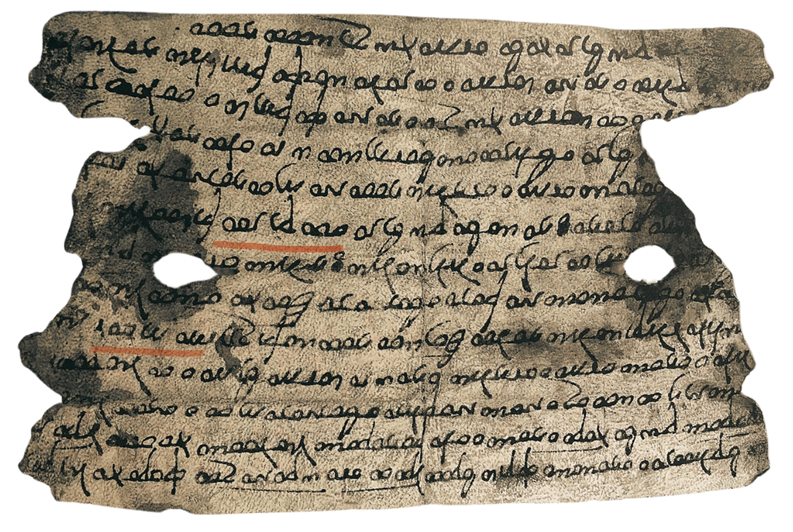
Dominance of Latin, Cyrillic & Arabic
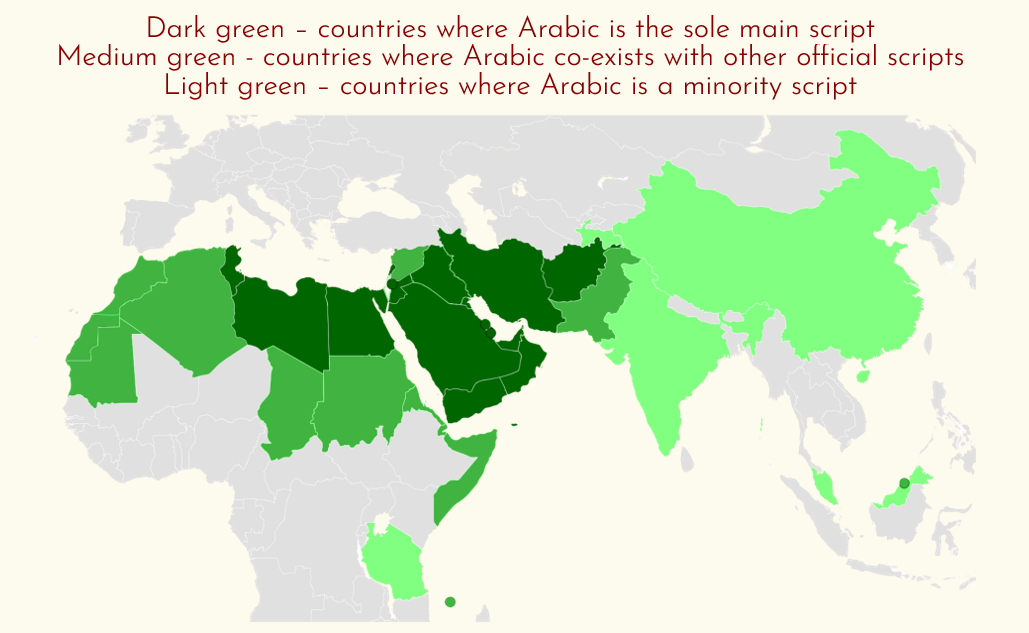
82% of the world’s countries today use either the Latin, Arabic or Cyrillic scripts as their main writing system. Their dominance is largely due to the remarkable amount of cultural power that a core has historically wielded over a periphery.
Dominance of Latin & Hindu-Arabic numerals
The Romans first imposed Latin on its imperial subjects as the script and language of the empire and later as that of the Catholic Church. Hence, we eventually saw the adoption of Latin by "pagan" peoples after their Christianisation and the abandonment of their indigenous writing systems (if they had one). This includes the adoption of Latin by the Poles, the replacement of runes by Germanic peoples, and replacement of Old Hungarian by the Hungarians. With the advent of European Colonialism from the 16th century onwards, Latin (as well as Hindu-Arabic numerals) further dominated the Americas, Africa and Australasia. Today, the Latin script alone is used as the primary script for around 700 languages and is the main script in more than half of the world’s nations.
In the case of societies that did not already have writing systems, the introduction of Latin might seem like a natural development, but in certain instances it was much more intentional and even insidious. The Spanish colonisers for example, saw Mayan writing as idolatrous, and so destroyed their written records, simultaneously attempting to erase other cultural vestiges, which they deemed as uncivilised or heretical. In 1562, the Yucatan bishop Diego de Landa famously burned en-masse Mayan images and paper codices containing the history and culture of their civilisation (ironically recording some of their writing, later helping decipherment efforts).²⁷ The Spanish likewise eradicated the use of the Incan quipu, similarly identified as idolatrous.²⁸


Dominance of Cyrillic
Cyrillic became the script of the Eastern Orthodox Church and was standardised by most Slavic-speaking peoples in Eastern Europe. Through Russian imperialism, Cyrillic further became the standard script for many non-Slavic peoples from the Caucasus to Siberia, the Urals and Central Asia.²⁹ Non-Slavic languages that now use the script often have additional letters for indigenous phonemes. For example, Udmurt, a Finno-Ugric language from the Urals has the additional letters using diacritics (Ӝ, Ӟ, Ӥ, Ӧ, and Ӵ).³⁰


Dominance of Arabic
With the Islamic conquests of the Middle-East and the Maghreb, Arabic became the standard language and script of the Muslim world. A myriad of scripts historically used in those regions such as Pahlavi (Middle Persian), Syriac, Sogdian and Tifinagh (Berber) were supplanted, with most becoming either endangered or functionally extinct after that point. The Persians, similarly had their own variant of Arabic (Perso-Arabic) with four constructed letters using diacritics (پ ,چ ,ژ ,گ) to match their indigenous phonemes.³¹ The influence of Islam eventually extended to central and sub-Saharan Africa and the Malay archipelago where Arabic merchants spread the religion and script. The variant of Arabic used in the Malay archipelago is referred to as Jawi script, with six constructed letters using diacritics (چ, ڠ, ڤ, ݢ, ۏ, ڽ) to match indigenous phonemes.³²
Scripts and modern power politics
The Soviet Union
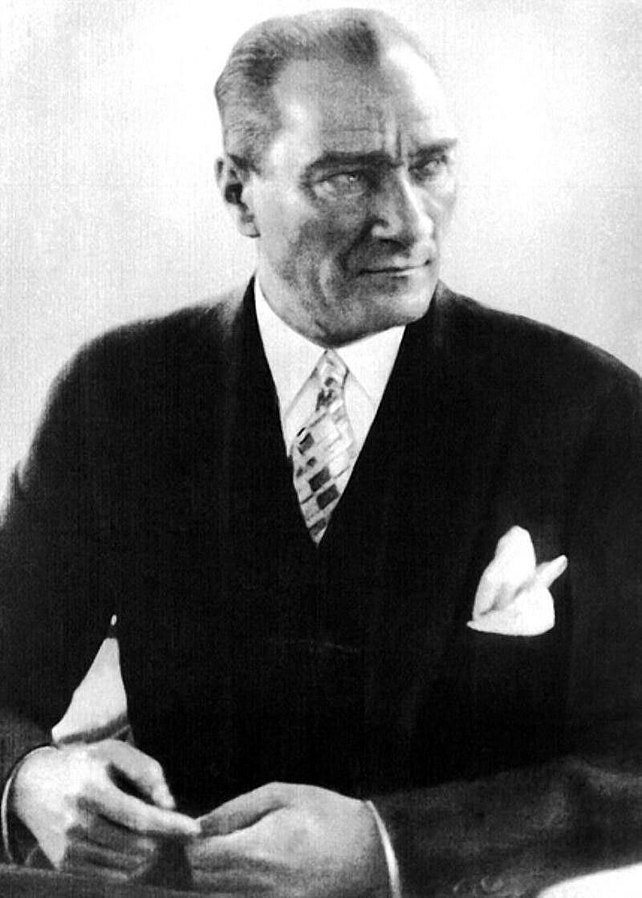
In the modern era, scripts have also had an important part to play in the projection of political power. For instance, after the Russian Revolution, the Soviet Union, toyed with the idea of changing the official script of the USSR to Latin in an attempt to modernise the country and unify its diverse peoples. The process was initiated in many of the Soviet Union’s imperial subjects by first introducing Latin to ethnic groups that had no writing system, and by creating the Latin-based Unified Turkic script to replace Arabic in Central Asia, much like the newly-formed Turkish Republic had done in the 1920s under Atatürk, and the Somalis did in the 1970s.
However, by 1930s the Soviet Latinisation campaign had stalled.³³ Under Stalin, the process was in fact reversed, with Russification and Cyrillisation implemented, both as a means of expediency (constantly converting Latin to Cyrillic was time-consuming) and as a means of cultural and political hegemony across the USSR and its satellites. Stalin was afraid that Latin would encourage separatism and Western influence.³⁴ Cyrillic was made the official script in Mongolia, Azerbaijan, Turkmenistan, Kazakhstan, Uzbekistan, Kyrgyzstan and Tajikistan. Since the fall of the Soviet Union, many of these states have dropped Cyrillic and reverted, or begun reverting to either Latin or native scripts in order to distance themselves from their Soviet past. Since Russia’s full-scale invasion of Ukraine, there have even been increased discussions about Romanising the Ukrainian language to culturally distance themselves from Russia (although the idea is not a new one).³⁵


Watch: From Я to R: How To Change A Country's Alphabet | Radio Free Europe
China
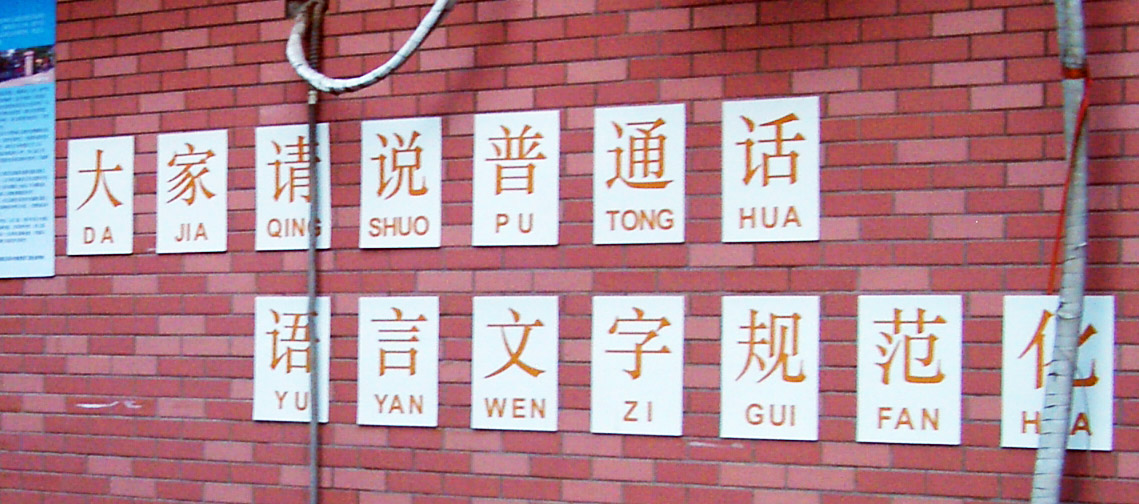
The Chinese communists also toyed with the idea of Latinising Chinese with the goal of modernisation. The Chinese language reform movement led by prominent Chinese intellectuals had pushed for the introduction of a phonetic script since the late Qing Dynasty (1644-1911), and many attempts had already been made to “Romanise” Chinese, the most successful of which was the Wade-Giles system. But in the 1950s, the Chinese Communist Party eventually opted for the simplification of Chinese characters instead, in order to preserve Chinese culture, with the formal development of Romanised Chinese (notably Hanyu Pinyin) as a phonetic guide only.³⁶
Japanese-occupied Korea
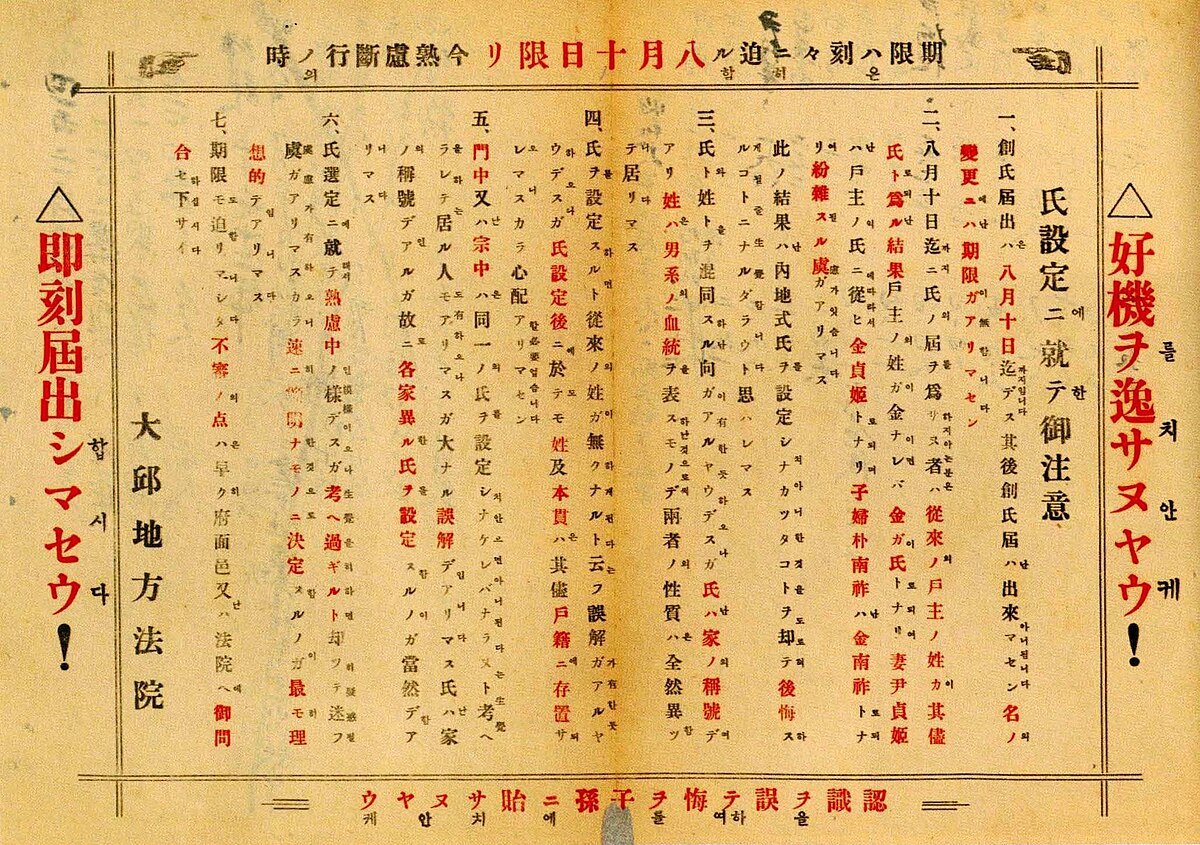
The Japanese took the process of cultural and political hegemony through language and writing one step further in their colonisation of Korea from 1910 to 1945. At first, they discouraged, and then severely restricted the use of Hangul and the Korean language, going so far as to force the conversion of Korean names into Japanese with the Sōshi-kaimei policy. After Japan’s defeat in the Second World War and their expulsion from Korea, Korea restored its national language and script.³⁷
The information age
Today, Latin is used as the main writing system by around 70% of the world’s population.³⁸ Largely thanks to European colonialism, Christianity, globalisation, and modern technology, the script is used almost universally when included as a secondary script or means of transliteration. Road signs, whether in Baghdad, Bangkok or Beijing all have Latin transliterations. The advent of globalisation and the internet age has increased the need for a universally-understood language, script and number system which has further entrenched the influence of English, Latin script and Hindu-Arabic numerals around the world. Apart from a few holdouts that still use traditional number systems in daily life, Hindu-Arabic numbers enjoy near universal usage, especially for science, mathematics and finance.

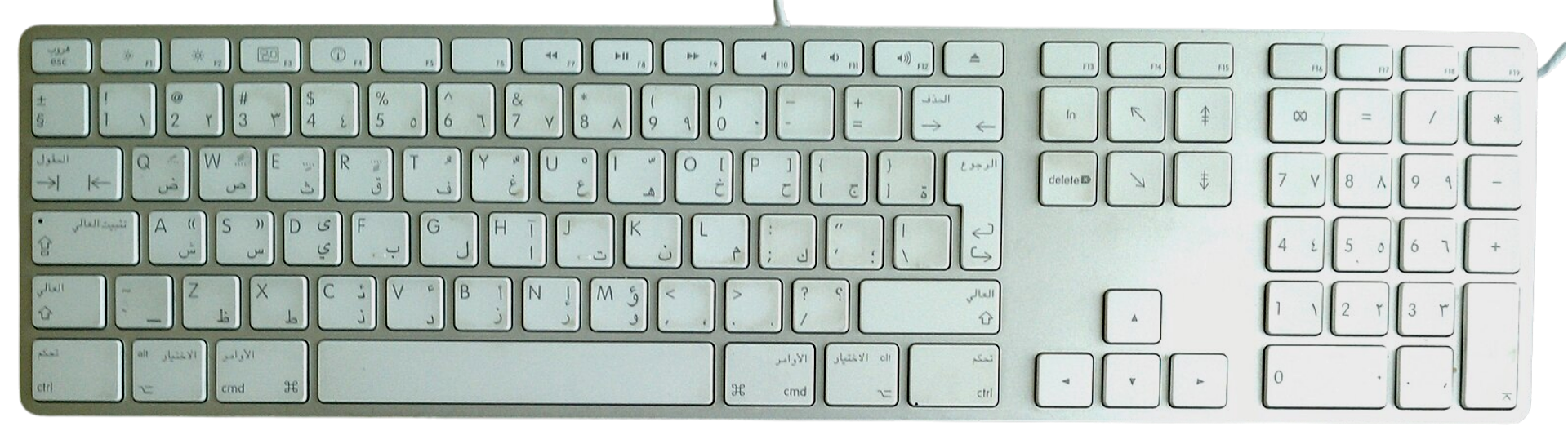
Today, computer keyboards around the world usually have dual scripts – Latin and a native script. Even the development of digital font layouts shows bias towards Latin. Technology and the internet has also greatly influenced the adoption of Latin punctuation in non-Latin writing systems. Early computing was predominantly developed in the West where Latin was the primary script. Alphabets are also much easier to encode than logographic scripts due to having far fewer characters. Coding languages were, therefore, mostly written in Latin/English. With the development of the internet in the United States, Latin further dominated, with URLs and email addresses now almost universally using Latin. Even the QWERTY keyboard layout that is so common place today, was designed for Latin. In fact, the use of the Greek semi-colon (·) has decreased substantially due to Greek keyboards only including the Latin variant (:).
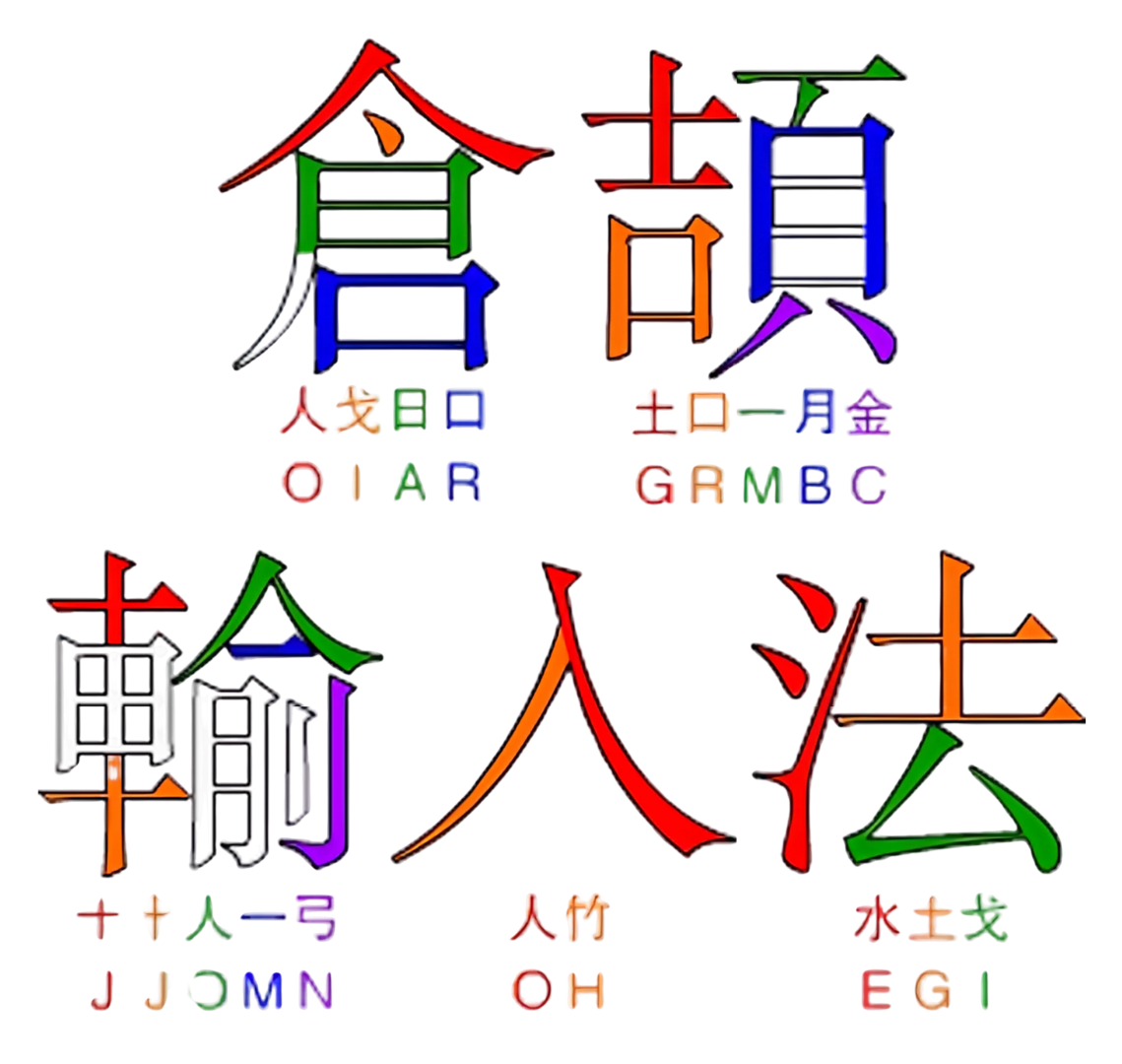
Latin as input method for Chinese (and Japanese)
Latin is also used as an input method for the use of Chinese on digital devices. Chinese has thousands of unique characters, making it impossible to make a computer keyboard with each one, or even for the 210 radicals. Several solutions to this problem have been designed using the Latin QWERTY keyboard instead. The earliest of these methods was the Cangjie input method, using Latin letters to build Chinese characters using Canjie codes. For example to build the character 暝 (dark), you can type the QWERTY code ABAC. Another system which works on QWERTY sequences is Wubi, which uses a five-stroke character model input method. Nowadays a more practical solution, especially with the availability of smartphones, is Pinyin (Romanised Chinese), where you can type the Romanised form of a Chinese word and a program will convert it to Chinese characters.³⁹ Japanese uses a similar system with their form of Romanised Japanese known as Rōmaji.
Watch: The Keyboard With A Thousand Characters | Techquickie
Homogenisation
We have just explored the concept of the standardisation of writing systems. But another way we can conceptualise it is as homogenisation. Today, the vast majority of the world uses Hindu-Arabic numerals, while around 95% of the world’s population (8.2 million people in 2025) use just four scripts (Latin, Chinese, Arabic and Devanagari).⁴⁰ The process of homogenisation, as we have seen, is due to many factors, including 'survival of the fittest' (e.g. alphabets replacing cuneiform, Latin used for programming, etc.), politics and projections of soft power (e.g. Greek, Latin, Arabic, Cyrillic, etc.), modernisation initiatives (e.g. Turkey and Somalia) and the influence of technology and globalisation. And just as a species can homogenise an ecosystem endangering others, so too can the homogenisation of certain writing systems lead to the endangerment or extinction of other writing systems (especially indigenous ones).
Watch: Why did Turkey adopt the Latin alphabet? | Mahanology
Homogenisation undoubtedly serves many practical purposes. Having one universal script, language, or number system of course improves communication and economic efficiency in a highly-globalised world. A common language and writing system can break down cultural barriers and bring groups closer together. And one can hardly deny that certain systems are simply better at doing a particular job than others (imagine trying to process large-scale financial transactions using Roman numerals for example…). Many actors have thus attempted to introduce universal systems with noble intentions such as Blissymbolics and Esperanto. But these systems haven’t enjoyed a great deal of success, especially when English and Latin already serve these functions. The adoption of a lingua franca or script can substantially improve the life opportunities for many people and nations around the world, and indeed in countries with a huge linguistic plurality such as India, this can even be necessary. Regardless, it would be of rank hypocrisy for me to suggest that a people shouldn’t adopt a foreign language or script to improve their life opportunities when I myself have inherited English as my mother tongue by birthright.
However, to be clear, we are not talking about simply using a lingua franca or foreign script for secondary use, but rather adopting them as a primary language/script where they affect the health and survivability of native systems. In ecological terms, when a writing system or language homgogenises a culture, the ‘homogenising agents’ (i.e. Latin, English, Hindu-Arabic numerals, Western culture, etc.) could be thought of as ‘invasive species’, displacing native systems due to their "fitness advantage", causing the endangerment and often extinction of the "weaker" ones. Approximately 300 writing systems are known to have existed throughout history, around half of which are now extinct. Of the remaining 140 or so, many are currently endangered due to competition with other scripts including, for example, traditional Mongolian, Tifinagh, Hanunó'o (used for Tagalog), Balinese and a host of others.⁴¹ To fully grasp the significance of homogenisation, remember that around 95% of the world’s population use just FOUR scripts.⁴²

But obviously writing systems aren’t biological organisms; they’re inventions of the human intellect. They can’t physically die out. And regardless, isn’t it logical for the "strongest" writing systems to dominate? Well, language is not only a means to an end. It doesn’t simply communicate raw data between interlocutors. Language is a filter through which we perceive and express our views of the world. Speech is one modality for this, and by extension writing. Writing is the way we mostly transmit knowledge across time and space. And despite writing as a concept having universal foundations, the variety in its forms is due to their unique evolutionary paths suiting particular languages and cultures (or often invented with their unique characteristics in mind). As Meletis & Dürscheid posit, “writing systems are shaped by the cultures in which they were conceived”.⁴³ Therefore, every time a script dies out, we lose a valuable piece of culture and a unique way of representing the world.
As semiotic systems, different writing systems develop different ways of linking symbols to meaning. Which writing system an individual uses thus determines the filters through which knowledge is transmitted and received. The homogenisation of one or several writing systems, therefore implies the normalisation of certain cognitive, and cultural (and thus also political) norms. One can only assume that this must have real world implications, not just for the endangered subjects, but for humankind as a whole. From a (capital R) Realist perspective, one might be tempted to think in terms of the “interests” of the homogenising agents or their hosts (i.e. the people that use them). But homogeneity is rarely beneficial in the long run for an ecosystem as a whole (including the dominant species!). We can only assume then that a universal world language or writing system would have at least some detrimental effects on humanity. But only a developed academic field of inquiry on the matter will be able to give us a definitive answer.
Relativity Theory (no not that one...)
One attempt at such a field of inquiry is Linguistic Relativity Theory which suggests that language influences our worldview and cognition (although exactly to what degree and in what manner is fiercely debated within the field). Some languages, for example the Australian Aboriginal Guugu Yimithirr language, have no concept of egocentric directions (i.e. left and right)⁴⁴ relying instead on other modes of orientation such as geocentric (based on landmarks). The Boas-Jakobson principle, meanwhile, asserts that languages differ essentially in what they must convey rather than what they may convey. Some languages, for example, force us to express the world in terms such as hierarchy (Korean and Japanese endings specify relative hierarchy of interlocutors), time (English has 12 functional verb tenses while Thai has no explicit verb tenses) or gender (all nouns in French, Spanish and German are gendered). As the prominent linguist Guy Deutscher points out, certain studies have shown that on average, in gendered languages, the perception of an object changes relative to its gender. So, for example, a bridge is associated more with masculine qualities in Spanish where the word is masculine (el puente), and feminine qualities in German where it is feminine (die Brücke).⁴⁵ In this way, our perceptions of the world are often so wrapped up in culture and reinforced in language that it can be hard to divorce them.

Watch: Does Your Language Change How You See The World? | Babbel USA
Script relativity theory
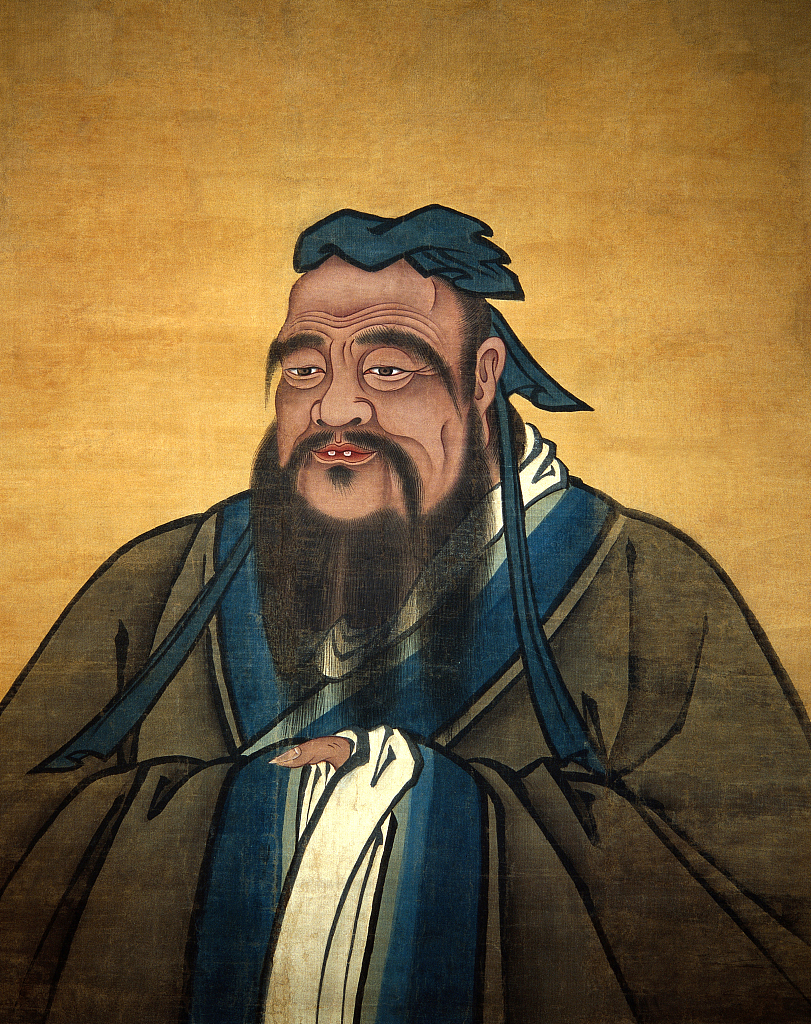
A similar burgeoning theory exists relating specifically to writing systems (as extensions of language). While it appears that such a name doesn’t yet exist for it, we can perhaps refer to it as Script Relativity Theory. In a seminal paper, psycholinguist Hye K. Pae suggests that cultures may indeed foster different ways of thinking based at least partly on which writing system they use. She argues that the linear and alphabetic scripts such as Latin promote linear and analytical thinking while the (originally) vertical logographic Chinese characters promote more holistic and contextual thinking. She even tangentially posits that the introduction of the alphabetic Korean Hangul may have been a factor for why the highly-hierarchical philosophy of Confucianism had a stronger influence on Korean society than in China or Japan.⁴⁶
Effects of alphabets and logographies
Alphabetical systems link graphemes (letters) to phonemes. Generally speaking, these phonemes on their own convey no meaning. They therefore have fewer etymological clues and inferences than logographic systems whose graphemes (logograms) represent morphemes (e.g. words) and are linked directly to meaning. Pae gives the example of how the Chinese symbol for husband (夫) is the character for sky (天) with one stroke above it and how this can be used to infer (consciously or subconsciously) the superiority of the husband in marital affairs.⁴⁷ Whether that was the original intention of the orthography or merely a coincidence is perhaps irrelevant.
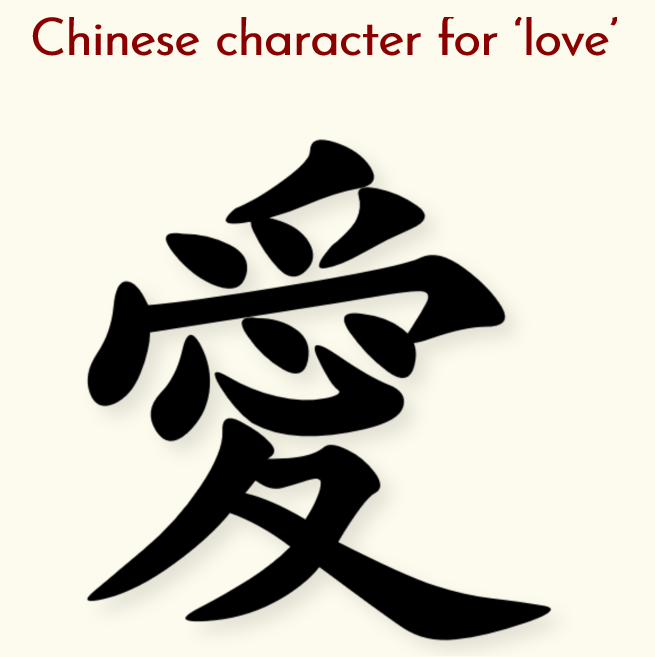
In English the written word love is less directly anchored to meaning and the connection between the word and the emotion needs to be learnt through context and cultural exposure. The traditional Chinese symbol for love on the other hand (愛) contains the symbols for hand (爫), cover (冖), heart (心) and a symbol referring to action (夂). You could literally translate this to “the action of the hand covering the heart”.⁴⁸ The Chinese character, therefore, conveys a much more primordial concept of love than just the word written phonetically.
Effects of writing on cognition
Conception of time
In a follow-up study by Pae and Wang, they found that learning to read in a specific script can even change one’s brain activity. Brain scans have shown for example, different neural activity when reading in English, Chinese, or Korean. In fact, which writing system one uses may even affect how we do arithmetic.⁴⁹ One study published in the Journal of Cognitive Sciences demonstrated that the direction of writing (i.e. left-to-right or right-to-left) also has cognitive effects when reasoning about time. English speakers who read left to right, conceptualise time as moving in the same direction and show a bias towards its representation as such. Hebrew speakers on the other hand, who read right to left, conceptualise time as moving in the opposite direction.
Take this one step further. English speakers represent time lineally, just as we do our writing, with visual metaphors such as “forward” or “back in time.” Chinese speakers on the other hand, use more vertical metaphors to refer to time.⁵⁰ For example, the Traditional Chinese characters for “last week” represent “the week above” (上星期)⁵¹ and those for “next week” represent “the week below” (下週).⁵²
Conception of space
Reading direction also influences our spatial biases. When you open up a webpage, where is your attention drawn to first, the top-left or the top-right side? And on which side should the most important elements be? You’ll find that English-language websites almost always put the most important piece of information – their logo – in the top-left corner, because English speakers naturally scan a page from the left to the right. The reverse is true of Hebrew or Arabic webpages. These subconscious biases carry over into spatial awareness more generally. As explained by cognitive neuroscientist Stanislas Dehaene, native reading orientation leads to an asymmetry in visual span. Studies show that readers of left-to-right scripts have a much greater visual span toward the right and vice versa for readers of right-to-left scripts.⁵³


Hedging bets
If it is the case that writing ingrains cognitive biases, then simply put, a diversity in writing systems is an asset to humanity as they influence (even if only slightly) the lenses through which we perceive the world. This means different ways of ordering our societies and different ways of solving problems. Of course, each world view has positive and negative aspects, but simply having a plurality of them is one small way for humanity to hedge its bets against dominant world views that become out of sync with the needs of the time. Take for example, the spread of scientific and philosophical literature into Europe during the Renaissance, only made possible by them being treasured and protected by the great scholarly repositories of the Islamic world. Had the whole world been Christian at the time, who knows how different history could have been.
Culture
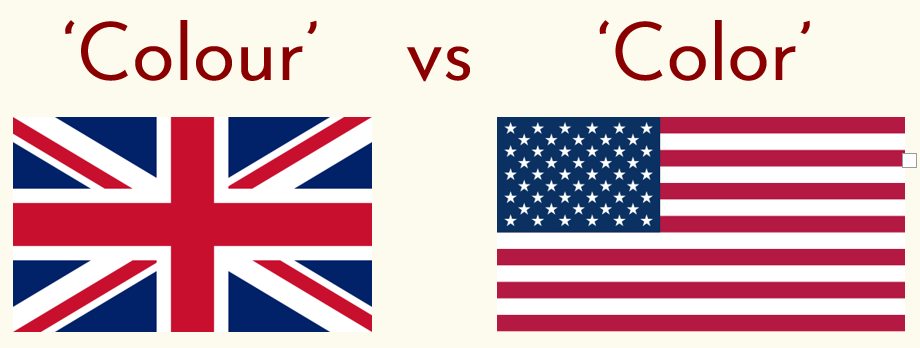
Cultural elements are also inversely encoded in writing. Writing is after all, a product of culture, and as Meletis states, entire cultures use it as an expression of their identity.⁵⁴ Hence why even the smallest discrepancy such as a ‘u’ in colour or an ‘s’ in civilisation can differentiate one’s nationality and perhaps hint at a range of defining traits. A more glaring example of this is Hindi and Urdu, which use Devanagari and Arabic scripts respectively. Despite being mutually intelligible languages to the point that they are almost indistinguishable, the difference in script points to their political, cultural and religious divergence.⁵⁵
Preservation through writing
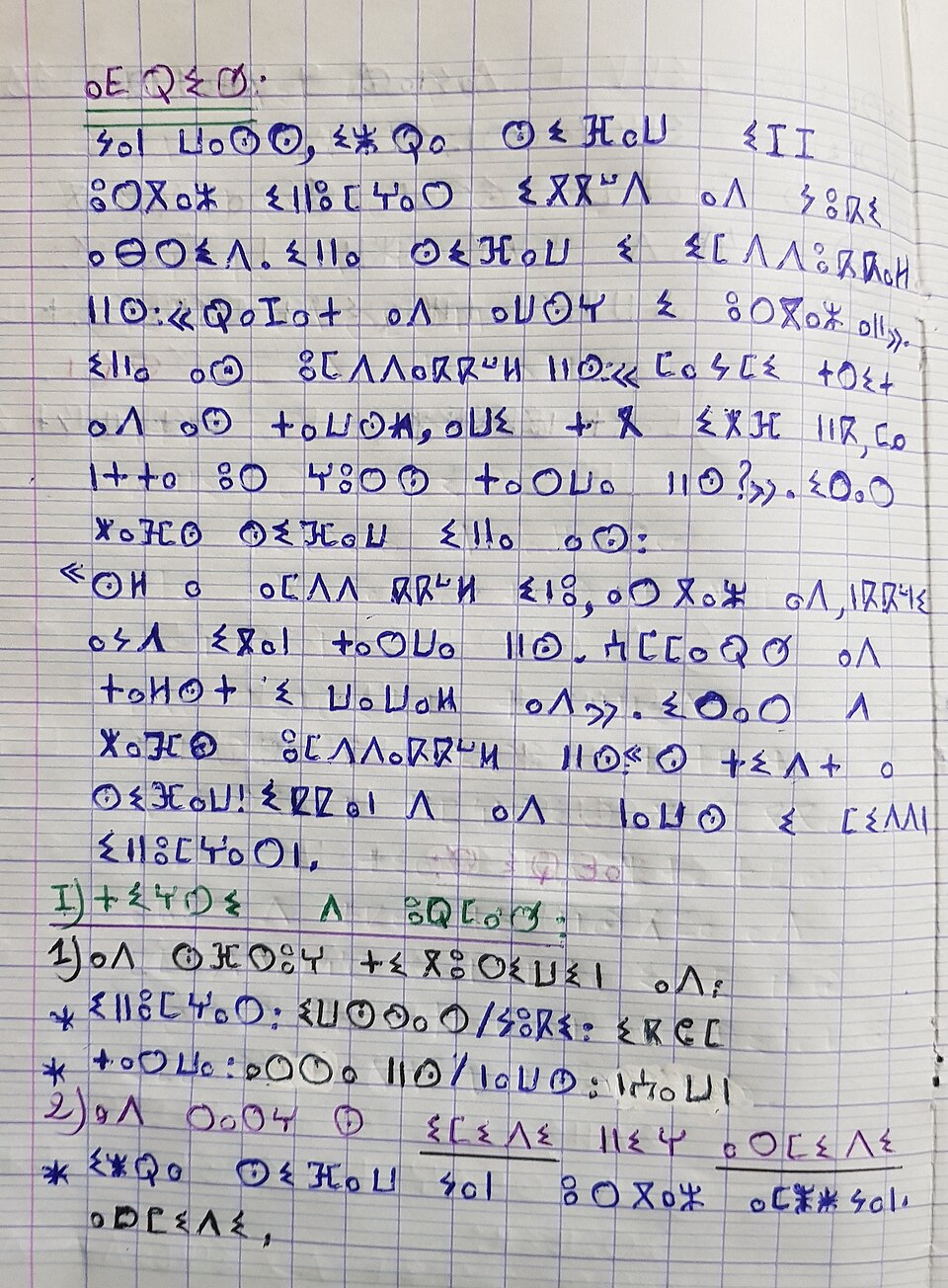
When the Chinese opted to preserve their traditional characters rather than adopting Latin in the mid-20th century, they had the protection of their culture in mind. It is the same reasoning that has driven attempts to develop scripts for non-literate indigenous cultures such as the Hmong, and Cherokee, and why efforts have been made to restore traditional scripts like Mongolian and Tifinagh Berber. In fact, in 2001, the Moroccan government implemented a series of cultural reforms and established the Institut Royal de la Culture Amazigh (IRCAM) (Amazigh is another name for Berber). Through these reforms, the Neo-Tifinagh script was formalised and is now taught in schools and displayed on many official signs. The same cannot be said for Algeria or Libya where the Amazigh culture remains heavily oppressed.⁵⁶ Similarly, in 2015, the Mongolian government passed the Mongolian Language Law, stipulating a range of policies to revive the traditional script including its mandatory teaching in schools and demonstrated working knowledge for government officials.⁵⁷
Diversity
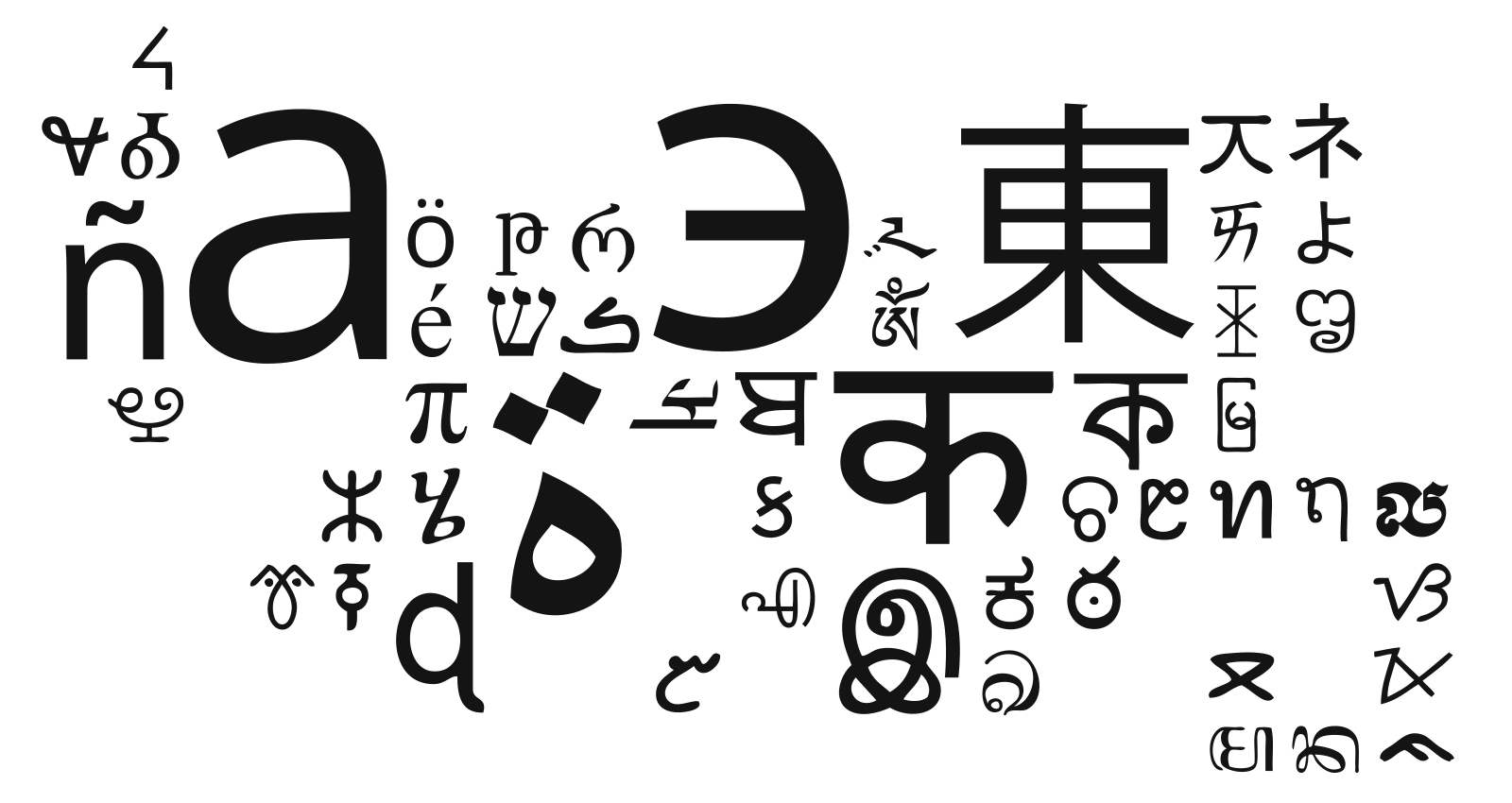
Diversity (of cultures, worldviews, cognitive biases, etc.) while of course at times causes clashes, is critical for a healthy eco-system of ideas, just as it is for maintaining balance in nature. It is not something that should be discarded for short-term practicality. In a time when humanity faces ever more complex challenges, the need for different ways of approaching problems is paramount. Some of the single-track ways of thinking that have brought about great civilisational advances (notably empirical scientism in the form of medicine, technology, etc.), are also the cause of some of the greatest threats to that civilisation (ecological destruction, overpopulation, nuclear weapons, overconsumption, etc.). And so we cannot necessarily rely on them to steer humanity on the straight and narrow path.

Respect
As writing systems have a part to play in the overall diversity of human ideas, they should be respected and protected just as we do endangered biological species and the temptation for large-scale homogenisation should be resisted. Beyond the practical reasons for this, there is immense intrinsic value in diversity, whether of cultures, languages or writing systems. From a purely humanistic perspective we should appreciate it, just as we inherently appreciate diversity in food, architecture, literature or art. It simply enriches the human experience.
Unchartered waters
We can perhaps be optimistic in the fact that the dominance of languages and scripts has been historically transient, ebbing and flowing with the course of history. (Who today speaks Latin or would recognises Aramaic script?) In this sense, perhaps we shouldn’t be too nihilistic. But nevertheless, the enduring effects of Latin's former dominance can be seen in the number of languages that are today descendants of it and the swathe of languages and scripts that it brought to extinction. Furthermore, the degree and rate of standardisation today is exponentially greater due to modern technology and globalisation. This means we are sailing into uncharted waters, and while scripts and languages are technically possible to revive, the record shows that once they are extinct, they remain so for all major intents and purposes. We cannot get them back.
Writing – what is it good for? Absolutely everything!
Writing systems, like all human ideas and inventions, rather than being purely revelatory, have long evolutionary genealogies based on cultural transmission and mutation. By studying writing systems, we can see just how interconnected they, and by extension human thought, truly are. Wrapped up within the cultural-linguistic packaging of writing systems is the knowledge, wisdom and world views that come with them. Diversity in writing systems is, therefore, of great value to humanity and they should not only be protected from erasure but actively fostered.
Final comments
I hope you have enjoyed the fascinating journey through the history of writing, from its origins to it current forms. The story I've told so far serves as a looking glass into how human ideas evolve and spread, and paints a striking picture of the workings of the human intellect. Ideas rarely emerge in isolation. More often, they are the result of a long process of evolution; shaped by interrelated concepts that are passed on, adapted, and borrowed through cultural transmission. Therefore, each idea, including that of writing, serves as a fossil through which we can study the archaeology of human knowledge.
I equally hope, therefore, that this piece has helped develop an appreciation for the world's minority writing systems, an awareness of their endangerment and the importance of preserving them.
Thank you for reading, and I hope to see you in the next segment Origins of Language.
Watch: The Spread of Writing: Every Year | Ollie Bye
Continue to Appendices →
Glossary of terms
Chapter 10
A posteriori: Latin for “from the latter”; knowledge derived from experience or empirical evidence
A priori: Latin for “from the former”; knowledge independent of experience, based on reasoning
Allopatric speciation: the formation of new species due to geographic isolation
Amate: a type of bark paper traditionally used in Mesoamerica for writing and art
Attic: relating to the dialect of Ancient Greek spoken in Athens and surrounding regions
Boas–Jakobson Principle: the idea that linguistic structure reflects cultural priorities, linking language and worldview
Calamus: a reed pen used in ancient times for writing, particularly on materials like papyrus
Centrifugal speciation: a model where speciation begins at the periphery of a central population, often due to expansion
Creatio ex nihilo: Latin for “creation from nothing”; the concept of something coming into being without pre-existing material
Cuneus: Latin for 'wedge', a mark made by a wedge-shaped stylus in clay, characteristic of cuneiform writing
Diacritic: a mark added to a letter to alter its pronunciation or meaning
Epistemology: the branch of philosophy concerned with the nature and scope of knowledge
Full writing system: a writing system capable of representing all the elements of a language, including grammar, vocabulary, and syntax, typically using phonetic symbols
Grapheme: the smallest functional unit of a writing system (like a letter or symbol) that conveys a distinction in meaning or sound
Hegemony: dominant influence or authority, especially of one culture or ideology over others
Homogenisation: the process of making things uniform or similar, often in culture or language
Hybrid: an organism or system resulting from the combination of two distinct sources
Ideogram: a graphic symbol that represents an abstract idea or concept rather than a specific word or sound (e.g., a symbol for “peace” or “danger”)
Interlocutor: a person participating in a dialogue or conversation
Ionian: relating to the dialect of Ancient Greek spoken along the coast of Asia Minor
Lingua franca: a language used as a common means of communication between people who do not share a native language
Logogram: a written character that represents a whole word rather than a single sound or syllable
Logography: a writing system in which each symbol represents a word or morpheme, rather than a single sound
Manuscript: a handwritten text, especially before the invention of printing
Memetics: the study of how cultural information spreads and evolves, modelled on biological evolution
Mutually intelligible: describing languages or dialects that speakers can understand without prior study
Ontology: the branch of philosophy concerned with the nature of being and existence
Parapatric speciation: speciation occurring in adjacent populations with limited interbreeding
Papyrus: a writing material made from the pith of the papyrus plant, used in ancient Egypt and the Mediterranean
Parchment: a writing surface made from animal skin, used especially in manuscripts
Paradigm shift: a fundamental change in underlying assumptions or methodologies within a field
Peripatric speciation: a type of speciation where a small population becomes isolated at the edge of a larger one
Phonogram: a symbol representing a specific sound or group of sounds
Pictogram/Pictograph: a symbol or drawing that represents a physical object or concept, one of the earliest forms of visual communication
Proto-writing: early systems of visual symbols used to convey limited information before the development of full writing systems
Semasiographic: conveying meaning through symbols without directly representing spoken language
Siniform: resembling the shape or style of Chinese characters
Soft power: influence exerted through cultural appeal, diplomacy, or values rather than coercion
Speciation: the evolutionary process by which new biological species arise
Sympatric speciation: speciation that occurs without geographic separation, within the same environment
Transliteration: the representation of text from one script using the characters of another
Typography: the technique of arranging written language visually, especially in printed or digital texts, including font choice and layout
Useful Links
Berkeley – Understanding Evolution - Speciation: https://evolution.berkeley.edu/evolution-101/speciation/defining-speciation/
CRG Review - Linguistic Imperialism: A Tool for Control in the British Empire: https://crgreview.com/linguistic-imperialism-a-tool-for-control-in-the-british-empire/
EBSCO – Cultural Transmission: https://www.ebsco.com/research-starters/social-sciences-and-humanities/cultural-transmission
Endangered Alphabets: https://www.endangeredalphabets.com/
Helpful Professor - Linguistic Relativity: 10 Examples and Definition: https://helpfulprofessor.com/linguistic-relativity-examplesEndangered Alphabets: https://www.endangeredalphabets.com//
Memetics Word-Gate – Memetics: The Science of Cultural Evolution: https://memetics.word-gate.com/
Milestone Localization - Latin Alphabet: Languages That Use it & Variations: https://www.milestoneloc.com/latin-alphabet-usage-and-variations/
Ni Hao Ma - How to Type Chinese on a Computer: https://nihaoma-mandarin.com/pedagogy-corner/type-chinese-on-a-computer/
ScienceDirect - Cultural Transmission: https://www.sciencedirect.com/topics/social-sciences/cultural-transmission
Footnotes
Chapter 10
1. Dimitrios Meletis and Christina Dürscheid, ‘Writing Systems and Their Use’ in Chiara Gianollo and Daniel Van Olmen (eds), Trends in Linguistics Studies and Monographs, vol. 369 (Walter de Gruyter GmbH & Co KG 2022), <https://dx.doi.org/10.1515/9783110757835-006>, p. 249
2. ‘Pen’, Encyclopædia Britannica, <https://www.britannica.com/technology/pen-writing-implement> [accessed April 2025]
3. ‘Demotic Script’, Encyclopædia Britannica, https://www.britannica.com/topic/demotic-script [accessed May 2025]
4. ‘Parchment’, Encyclopædia Britannica, <https://www.britannica.com/topic/parchment> [accessed May 2025]
5. Martyn Lyons, Books: a Living History, Thames & Hudson, 2013, p. 19
6. ‘Paper’, Encyclopædia Britannica, <https://www.britannica.com/technology/paper> [accessed May 2025]
7. Martyn Lyons, Books: a Living History, Thames & Hudson, 2013, p. 84
8. Martha J. Macri, ‘Maya & Other Mesoamerican Scripts’ in Peter T. Daniels and William Bright, The World’s Writing Systems, Oxford University Press, 1996, p. 183
9. Rose Barfield, ‘Who Invented the Wheel: A Brief History’, Bricsys, <https://www.bricsys.com/blog/who-invented-the-wheel-a-brief-history> [accessed April 2025]
10. Jerry A. Coyne, Speciation, Sunderland, Mass, 2004, p. 2
11. idib, p. 86
12. idib
13. Andrew Z. Colvin et al, ‘Peripatric Speciation, WikiJournal of Science, vol. 1, no. 2, 2018, <https://doi.org/10.15347/WJS/2018.008>, p. 1
14. Jerry A. Coyne, Speciation, Sunderland, Mass, 2004, p. 85
15. ‘Ionic Alphabet’, Encyclopædia Britannica, <https://www.britannica.com/topic/Ionic-alphabet> [accessed April 2025]
16. Maria Fragoulaki, Kinship in Thucydides: Intercommunal Ties and Historical Narrative, Oxford University Press, 2013, p. 214
17. Simon Hornblower, ‘Athens of Ancient Greek Civilization’, Encyclopædia Britannica, <https://www.britannica.com/place/ancient-Greece/Athens> [accessed April 2025]
18. Rebecca K. Kulik, ’Carolingian Renaissance’, Encyclopædia Britannica, <https://www.britannica.com/topic/Carolingian-Renaissance> [accessed April 2025]
19. Richard Barker, ‘Middle English, The History of English, 3 April 2024, <https://www.thehistoryofenglish.com/middle-english> [accessed April 2025]
20. Martin Lorée, ‘Origins / From the Punctus Interrogativus to the Printers of the 16th Century: The History of the Question Mark’, Print Industry, <https://www.printindustry.news/story/42984/from-the-punctus-interrogativus-to-the-printers-of-the-16th-century-the-history-of-the-question-mark [accessed April 2025]
21. ‘William Caxton’, Encyclopædia Britannica, <https://www.britannica.com/biography/William-Caxton> [accessed April 2025]
22. ‘How Was Shakespeare’s Name Spelled?’, No Sweat Shakespeare, <https://nosweatshakespeare.com/how-was-shakespeares-name-spelled/> [accessed April 2025]
23. ‘A Dictionary of the English Language’, Encyclopædia Britannica, <https://www.britannica.com/topic/A-Dictionary-of-the-English-Language-by-Johnson> [accessed April 2025]
24. Raven I. McDavid, ‘Noah Webster‘, Encyclopædia Britannica, 24 May 2025, <https://www.britannica.com/biography/Noah-Webster-American-lexicographer> [accessed April 2025]
25. ‘Australian, American and British Spelling’, Content Manual, <https://contentmanual.com.au/style-editing/spelling-conventions/australian%2C-american-british-spelling> [accessed April 2025]
26. Nicholas Ostler, The Last Lingua Franca: English Until the Return of Babel, Walker & Co, 2010, pp. n18, 69-73, 81
27. Hourly History, Mayan Civilization: a History From Beginning to End, Hourly History Publications, 2016, p. n15
28. K. Kris Hirst, ‘Quipu: South America's Ancient Writing System’, Thought Co, 3 July 2019, <https://www.thoughtco.com/introduction-to-quipu-inca-writing-system-172285> [accessed April 2025]
29. Nicholas Ostler, The Last Lingua Franca: English Until the Return of Babel, Walker & Co, 2010, pp. 199-200
30. Simon Ager, ‘Udmurt’, Omniglot, <https://www.omniglot.com/writing/udmurt.htm> [accessed April 2025]
31. Simon Ager, ‘Persian’, Omniglot, <https://www.omniglot.com/writing/persian.htm> [accessed April 2025]
32. Simon Ager, ‘Malay’, Omniglot, <https://www.omniglot.com/writing/malay.htm> [accessed April 2025]
33. Julie Tetel Andresen, Phillip M. Carter, Languages In The World: How History, Culture, and Politics Shape Language, Wiley Blackwell, 2016, pp. 110-111
34. L.A. Grenoble, Language Policy in the Soviet Union, Kluwer Academic Publishers, 2003, p. 54
35. Paul A. Goble, ‘Moscow upset by new talk in Kyiv about Latinization of Ukrainian‘, Euromaidan Press, 10 August 2021, <https://euromaidanpress.com/2021/08/10/moscow-upset-by-new-talk-in-kyiv-about-latinization-of-ukrainian/> [accessed April 2025]
36. John S. Rohsenow, ‘Fifty Years of Script and Written Language Reform in the P.R.C.‘ in ‘Minglang Zhou and Hongkai Sun, Language Policy in the People’s Republic of China: Theory and Practice Since 1949’, Language Policy, vol. 4, 2004, pp. 21-22)
37. Sōshi-kaimei, DBpedia, <https://dbpedia.org/page/S%C5%8Dshi-kaimei> [accessed April 2025]
38. Don Vaughan, ‘The World’s 5 Most Commonly Used Writing Systems’, Encyclopædia Britannica, <https://www.britannica.com/list/the-worlds-5-most-commonly-used-writing-systems> [accessed April 2025]
39. ‘Chinese Input Methods: A Guide for Second Language Learners’, Hacking Chinese, <https://www.hackingchinese.com/chinese-input-methods-a-guide-for-second-language-learners/> [accessed April 2025]
40. The World's Most Popular Writing Scripts‘, World Atlas, <https://www.worldatlas.com/articles/the-world-s-most-popular-writing-scripts.html> [accessed April 2025]
41. Andrea Valentino, ‘The Alphabets at Risk of Extinction’, BBC, <https://www.bbc.com/future/article/20200121-the-alphabets-at-risk-of-extinction> [accessed April 2025]
42. The World's Most Popular Writing Scripts‘, World Atlas, <https://www.worldatlas.com/articles/the-world-s-most-popular-writing-scripts.html> [accessed April 2025]
43. Dimitrios Meletis and Christina Dürscheid, ‘Writing Systems and Their Use’ in Chiara Gianollo and Daniel Van Olmen (eds), Trends in Linguistics Studies and Monographs, vol. 369 (Walter de Gruyter GmbH & Co KG 2022), <https://dx.doi.org/10.1515/9783110757835-006> p. 249
44. Guy Deutscher, Through the Language Glass: Why the World Looks Different in Other Languages, Random House, 2011, pp. 160-163
45. idib, pp. 208-211
46. Hye K. Pae, ‘Script Effects as the Hidden Drive of the Mind, Cognition, and Culture’ in R. Malatesha Joshi (ed), Literacy Studies: Perspectives from Cognitive Neurosciences, Linguistics, Psychology and Education, vol. 21, Springer, 2020, <https://doi.org/10.1007/978-3-030-55152-0>
47. Hye K. Pae, ‘Script Effects as the Hidden Drive of the Mind, Cognition, and Culture’ in R. Malatesha Joshi (ed), Literacy Studies: Perspectives from Cognitive Neurosciences, Linguistics, Psychology and Education, vol. 21, Springer, 2020, <https://doi.org/10.1007/978-3-030-55152-0>, p. n9
48. Chinese ‘love’ character, Wiktionary, <https://en.wiktionary.org/wiki/%E6%84%9B> [accessed April 2025]
49. Hye K. Pae and Min Wang, ‘The Effects of Writing Systems and Scripts on Cognition and beyond: An Introduction’, Reading and Writing, vol. 35, no. 6, 2022
50. Orly Fuhrman and Lera Boroditsky, ‘Cross-Cultural Differences in Mental Representations of Time: Evidence From an Implicit Non-linguistic Task’, Cognitive Science, vol. 34, no. 8, <https://doi.org/10.1111/j.1551-6709.2010.01105.x>, pp. 1430-1431
51. Chinese ‘last week’, Wiktionary, <https://en.wiktionary.org/wiki/%E4%B8%8A%E6%98%9F%E6%9C%9F> [accessed April 2025]
52. Chinese ‘next week’, Wiktionary, <https://en.wiktionary.org/wiki/%E4%B8%8B%E9%80%B1> [accessed April 2025]
53. Stanislas Dehaene, Reading in the Brain: The Science and Evolution of a Human Invention, Penguin, 2010, p. 16-17
54. Dimitrios Meletis and Christina Dürscheid, ‘Writing Systems and Their Use’ in Chiara Gianollo and Daniel Van Olmen (eds), Trends in Linguistics Studies and Monographs, vol. 369 (Walter de Gruyter GmbH & Co KG 2022), <https://dx.doi.org/10.1515/9783110757835-006>, p. 1
55. idib, p. 155
56. ‘Tifinagh’, Endangered Alphabets, <https://www.endangeredalphabets.net/alphabets/tifinagh/> [accessed April 2025]
57. ‘Law on Mongolian Language’, Unified Legal Information System, <https://legalinfo.mn/en/edtl/16760272253581> [accessed May 2025]
Fig. 10.1: Friedrich Nietzsche portrait, Wikimedia Commons, <https://commons.wikimedia.org/wiki/File:Nietzsche187a.jpg> [public domain, accessed May 2025]
Fig. 10.1b: @Celette, Plaque Square Michel Foucault, Wikimedia Commons, <https://commons.wikimedia.org/wiki/File:Plaque_square_Michel-Foucault,_Paris_5e.jpg> [CC BY-SA 4.0, accessed May 2025]
Fig. 10.2: Gaston Maspero, ‘Comparative Evolution of Cuneiform, Egyptian and Chinese Characters’, 1870, Wikimedia Commons, <https://commons.wikimedia.org/wiki/File:Comparative_evolution_of_Cuneiform,_Egyptian_and_Chinese_characters.svg> [CC BY-SA 4.0]
Fig. 10.3: Chinese bamboo strips artefacts, (background removed), illustration by Internet Archive Book Images, Wikimedia Commons, <https://commons.wikimedia.org/wiki/File:Ruins_of_desert_Cathay_-_personal_narrative_of_explorations_in_Central_Asia_and_westernmost_China_(1912)_(14596515429).jpg> [no known copyright, accessed May 2025]
Fig. 10.4: ancient Egyptian reed calamus, (background removed), illustration by Museo Egizio, Turin, Wikimedia Commons, <https://commons.wikimedia.org/wiki/File:Calamo_per_scrittura_ricavato_da_canna_palustre_tagliata_in_obliquo_13S0086.tif> [public domain, accessed May 2025]
Fig. 10.5: Egyptian scribe statue. (background removed), illustration by Walter Art Museum, Wikimedia Commons, <https://commons.wikimedia.org/wiki/File:Egyptian_-_Scribe_Statue_of_Min-nakht_-_Walters_22230_-_Three_Quarter.jpg> [public domain, accessed May 2025]
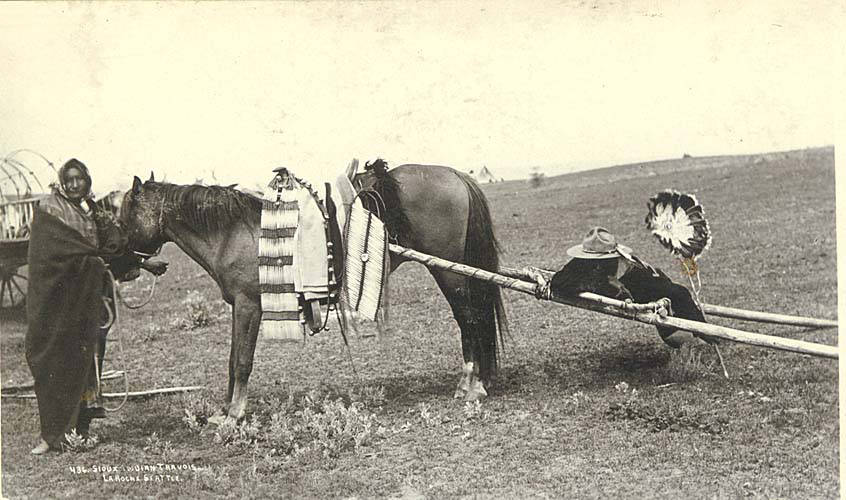
Fig. 10.6: Native American travois, Wikimedia Commons, <https://commons.wikimedia.org/wiki/File:Sioux_Indian_travois,_ca_1893_(LAROCHE_138).jpeg> [public domain, accessed May 2025]
Fig. 10.7: Andrew Z. Colvin, sympatric speciation diagram, Wikimedia Commons, <https://commons.wikimedia.org/wiki/File:Sympatric_Speciation_(process_diagram).png> [CC BY-SA 4.0]
Fig. 10.8: Andrew Z. Colvin, allopatric speciation diagram, Wikimedia Commons, <https://commons.wikimedia.org/wiki/File:Allopatric_Speciation_Schematic.svg> [CC BY-SA 4.0]
Fig. 10.9: Andrew Z. Colvin, peripatric speciation diagram, Wikimedia Commons, <https://commons.wikimedia.org/wiki/File:Peripatric_Speciation_Schematic.svg> [CC BY-SA 4.0]
Fig. 10.10: Andrew Z. Colvin, centrifugal speciation diagram, Wikimedia Commons, <https://commons.wikimedia.org/wiki/File:Centrifugal_Speciation_Schematic.svg> [CC BY-SA 4.0]
Fig. 10.11: Andrew Z. Colvin, parapatric speciation diagram, Wikimedia Commons, <https://commons.wikimedia.org/wiki/File:Parapatric_Speciation_Schematic.svg> [CC BY-SA 4.0]
Fig. 10.12: Dario Urruty, mule, Wikimedia Commons, <https://commons.wikimedia.org/wiki/File:Juancito.jpg> [public domain, accessed May 2025]
Fig. 10.13: Ancient Greek epichoric alphabets, Wikimedia Commons, <http://commons.wikimedia.org/wiki/File:Ancient_Greek_epichoric_alphabets_(Indonesian_version).svg> [public domain, accessed May 2025]
Fig. 10.13b: John Farey, 19th century printing press, (background removed), Wikimedia Commons, <https://commons.wikimedia.org/wiki/File:Printing_press.jpg> [public domain, accessed May 2025]
Fig. 10.14: Noah Webster Dictionary 1828, Wikimedia Commons, <https://commons.wikimedia.org/wiki/File:American_Dictionary_of_the_English_Language_1828.jpg> [CC BY-SA 4.0]
Fig. 10.15: Wassup, Cambridge Dictionary<https://dictionary.cambridge.org/dictionary/english/wassup> [accessed May 2025]
Fig. 10.16: Bactrian text in Greek, (colour enhance, background removed), Wikimedia Commons, Wikimedia Commons, <https://commons.wikimedia.org/wiki/File:Bactrian_document_Northern_Afghanistan_4th_century.jpg> [CC BY-SA 4.0, accessed May 2025]
Fig. 10.17: World distribution of Latin script, (background removed), Wikimedia Commons, <https://commons.wikimedia.org/wiki/File:Latin_alphabet_world_distribution.svg> [public domain, accessed May 2025]
Fig. 10.18: Rivera, Diego, mural, illustration by Wolfgang Sauber, Wikimedia Commons, <https://commons.wikimedia.org/wiki/File:Murales_Rivera_-_Treppenhaus_9_B%C3%BCcherverbrennung.jpg> [CC BY-SA 3.0, accessed May 2025]
Fig. 10.18b: Diego de Landa, (image enhanced), ‘Relación de las Cosas de Yucatán’, Wikimedia Commons, <https://commons.wikimedia.org/wiki/File:De_Landa_alphabet.jpg> [public domain, accessed June 2025]
Fig. 10.19: Cyrillic world distribution, (background removed), Wikimedia Commons, <https://commons.wikimedia.org/wiki/File:Cyrillic_alphabet_world_distribution.svg> [public domain, accessed May 2025]
Fig. 10.20: Madilyan, Nata, Udmurt people, Wikimedia Commons, <https://commons.wikimedia.org/wiki/File:Sep,_Italmas_Nuk_-_48012139112.jpg> [CC BY 2.0, accessed April 2025]
Fig. 10.21: Global distribution of Arabic script, (background removed), Wikimedia Commons, <https://commons.wikimedia.org/wiki/File:Arabic_alphabet_world_distribution_-_three_shades.png> [public domain, accessed April 2025]
Fig. 10.22: Kazakh national emblem 2014-2018, Wikimedia Commons, <https://commons.wikimedia.org/wiki/File:Emblem_of_Kazakhstan_(2014%E2%80%932018).png> [no copyright, accessed May 2025]
Fig. 10.23: Kazakh national emblem 2018, Wikimedia Commons, <https://commons.wikimedia.org/wiki/File:Emblem_of_Kazakhstan_3d.svg> [no copyright, accessed May 2025]
Fig. 10.24: @Vmenkov, Pinyin – kindergarten, Wikimedia Commons, <https://commons.wikimedia.org/wiki/File:Dajia-shuo-Putonghua-2817.jpg> [CC BY-SA 3.0, accessed May 2025]
Fig. 10.25: Sōshi-kaimei bulletin, Wikimedia Commons, <https://commons.wikimedia.org/wiki/File:Japanese_Name_Change_Bulletin_of_Taikyu_Court.jpg> [public domain, accessed May 2025]
Fig. 10.26: Henri Bergius, Georgian sign, Wikimedia Commons, <https://commons.wikimedia.org/wiki/File:Street_sign_in_Georgian_and_Latin_alphabets.jpg> [CC BY-SA 2.0, accessed May 2025]
Fig. 10.27: @Arbitrarily0, Arabic keyboard, Wikimedia Commons, <https://commons.wikimedia.org/wiki/File:Arabic_keyboard.jpg> [CC BY-SA 3.0]
Fig. 10.28: @Samwingkit. Canjie input method, (background removed), Wikimedia Commons, <https://commons.wikimedia.org/wiki/File:%E5%80%89%E9%A0%A1%E8%BC%B8%E5%85%A5%E6%B3%95_%E6%8B%86%E7%A2%BC.jpg [public domain, accessed May 2025]
Fig. 10.29: Ataturk, Wikimedia Commons, < https://commons.wikimedia.org/wiki/File:Atat%C3%BCrk_Kemal.jpg> [public domain, accessed May 2025]
Fig. 10.30: Andrew Mercer, Kookaburra with Cane Toad, Wikimedia Commons, <https://commons.wikimedia.org/wiki/File:Kookaburra_with_Cane_Toad_-_AndrewMercer_-_DSC00046.jpg> [CC BY-SA 4.0, accessed May 2025]
Fig. 10.31: @Wilfredor, General Rafael Urdaneta Bridge, Venezuela, Wikimedia Commons, <https://commons.wikimedia.org/wiki/File:General_Rafael_Urdaneta_Bridge_view_from_the_lake_to_Cabimas_side.jpg> [public domain, accessed May 2025]
Fig. 10.32: Confucius, Wikimedia Commons, <https://commons.wikimedia.org/wiki/File:%E5%AD%94%E5%AD%90%E7%87%95%E5%B1%85%E5%83%8F.jpg> [public domain, accessed May 2025]
Fig. 10.33: David Schrader, Wikipedia Arabic screenshot, sourced from Wikipedia Arabic, <https://ar.wikipedia.org/wiki/%D8%A7%D9%84%D8%B5%D9%81%D8%AD%D8%A9_%D8%A7%D9%84%D8%B1%D8%A6%D9%8A%D8%B3%D8%A9> [accessed May 2025]
Fig. 10.33b: David Schrader, Wikipedia English screenshot, sourced from Wikipedia, <https://en.wikipedia.org/wiki/Main_Page> [accessed May 2025]
Fig. 10.33c: David Schrader, ‘Colour vs Color’, (© author’s own, 2025)
Fig. 10.34: Neddi, Mounir, Tifinagh notebook, Wikimedia Commons, <https://commons.wikimedia.org/wiki/File:Notebook_of_a_Moroccan_student_from_Imouzzer_Marmoucha_(Tifinagh).jpg> [public domain, accessed May 2025]
Fig. 10.35: Justin Dolske, Hawaii beach trash 10 December 2016, Wikimedia Commons, <https://commons.wikimedia.org/wiki/File:Beach_trash_(30870156434).jpg> [CC BY-SA 2.0, accessed May 2025]
Fig. 10.36: @Planemad, world scripts, Wikimedia Commons, https://commons.wikimedia.org/wiki/File:Chart_of_world_writing_systems.svg [CC BY-SA 3.0, accessed May 2025]
Fig. 10.37: Ryan Starkey, (image modified, background removed), ‘The ABCD Family Tree’, Starkey Comics, <https://starkeycomics.com/2018/12/11/the-abcd-family-tree/> [© with permission, accessed May 2025]
Share this page
To the
Top
To the
Bottom