



Flags | Pt. 2: Design

Updated: Sep 23


Contents
Colour
Colour is perhaps the most important element of a flag, carrying deep symbolic relevance while giving a flag aesthetic appeal. But why are some colours so popular, while others are scarcely used at all?
Trivia time!
So why are these colours the most common?
And why, on the other hand, are these colours so uncommon?
Orange features relatively rarely on national flags - approximately 4% to be precise. Orange is technically a combination of red and yellow and was only differentiated as a separate colour in the English language around 500 years ago. This is due to the colour actually occurring quite rarely in nature. The colour is named after the fruit of the same name, after it was introduced into Europe from Asia.
Purple was historically an incredibly expensive dye, made from crushed sea snails - the word purple itself comes from the Greek porphura, referring to a specific species. This is why the colour was worn almost exclusively by the aristocracy, and where we get the expression “born in the purple”. While purple is no longer an expensive colour today (thanks to synthetic dyes), most national colours and flags were designed in a time when it still was. Therefore, only two national flags today include the colour in minor detail: Dominica and the Northern Mariana Islands.
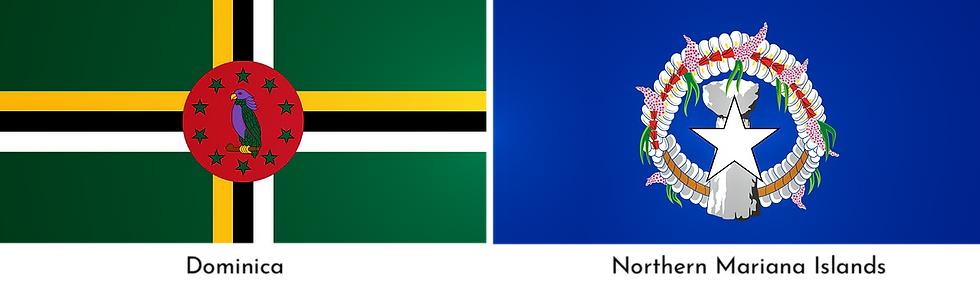
Pink, meanwhile, is technically just a light shade of red, and the two weren’t historically differentiated. The word pink itself is only about 500 years old, deriving from a family of flowers known as ‘the pinks’. The colour that we would today call ‘pink’ wasn’t always popular in the past, and certainly didn’t have the same connotations that it has now. This may explain why not a single national flag includes the colour.
Brown, like pink, doesn’t feature on any national flags, and it’s not hard to imagine why. Its symbology can be associated with the earth, but also with, well, dirtiness...
Fun Fact!
The expression "red flag" (referring to a warning sign or a signal that tells you something is wrong) originates from the 17th-18th centuries, when militaries and vessels started using red flags to signal danger.
Simplicity
Many flag designs are as simple as a few coloured stripes, which often cause confusion when differentiating them from similar ones.
However, despite the simplicity of these flag layouts, they are no less symbolically relevant, instead telling stories through their colours. For example, the colours on the modern Irish flag symbolise the country's turbulent religious history, with green standing for Catholics, orange for Protestants, and white for peace between them. The same colours on the flag of Côte d'Ivoire, meanwhile, represent growth (orange), unity (white) and hope (green).
Another example is the Ukrainian flag, whose colours have historical relevance dating back more than one thousand years, when it was used by the rulers of Kyiv. Today, it is said to represent a blue sky over yellow fields and is an enduring symbol of their historic fight for independence.
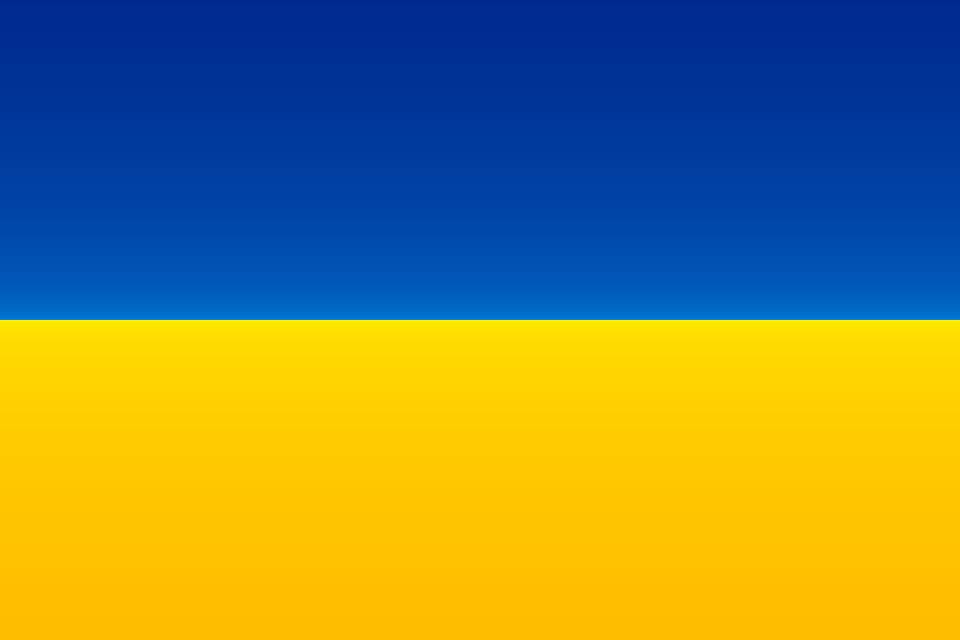
Ukraine
Can you match these flags correctly? Drag them to the correct place if you can!
Distinctive Flags
Many flags do, on the other hand, feature intricate patterns and symbols that have fascinating backstories, setting them apart from the rest.
Here are some of the contenders for most unique national flag:
1. Bhutan
From the snowy Himalayas comes the flag of the tiny Buddhist kingdom of Bhutan. The flag features diagonal yellow and orange halves, representing the king and the Buddha respectively. On top lies a white dragon known in Bhutanese folklore as the Druk. It is said that when thunder occurs, it is the roar of the Druk. The Druk also symbolises wealth, hence why on the flag the creature is seen clutching jewels in its claws.

2. Brunei
Brunei’s flag is bold and full of symbolism. The yellow background, less common on flags, stands for the sultan, while the black and white stripes represent the country’s senior ministers. At the centre is a red crest representing Islam, a parasol for the monarchy, and two hands symbolising protection.

3. Eswatini
The flag of Eswatini is one of the most striking in Africa. It features a large shield and two spears across the centre, symbolising protection from enemies. The shield is black and white, standing for unity between people of different races. Behind it, bold stripes of blue, yellow, and red represent peace, natural resources, and past battles.

4. Mongolia
Vertical red stripes represent freedom, prosperity and progress, while a blue stripe represents the eternal blue sky. But if the colour scheme and shape of the Mongolian flag are nothing to write home about, its core symbol, the Soyombo, certainly is. The Soyombo is the national symbol of Mongolia and has a history that goes back more than 500 years. If you look carefully, you’ll see it features 10 symbolic elements, including the sun, fire, a spear, taijitu (yin-yang) and the walls of a fort, just to name a few. Now that’s a lot to unpack!

5. Nepal
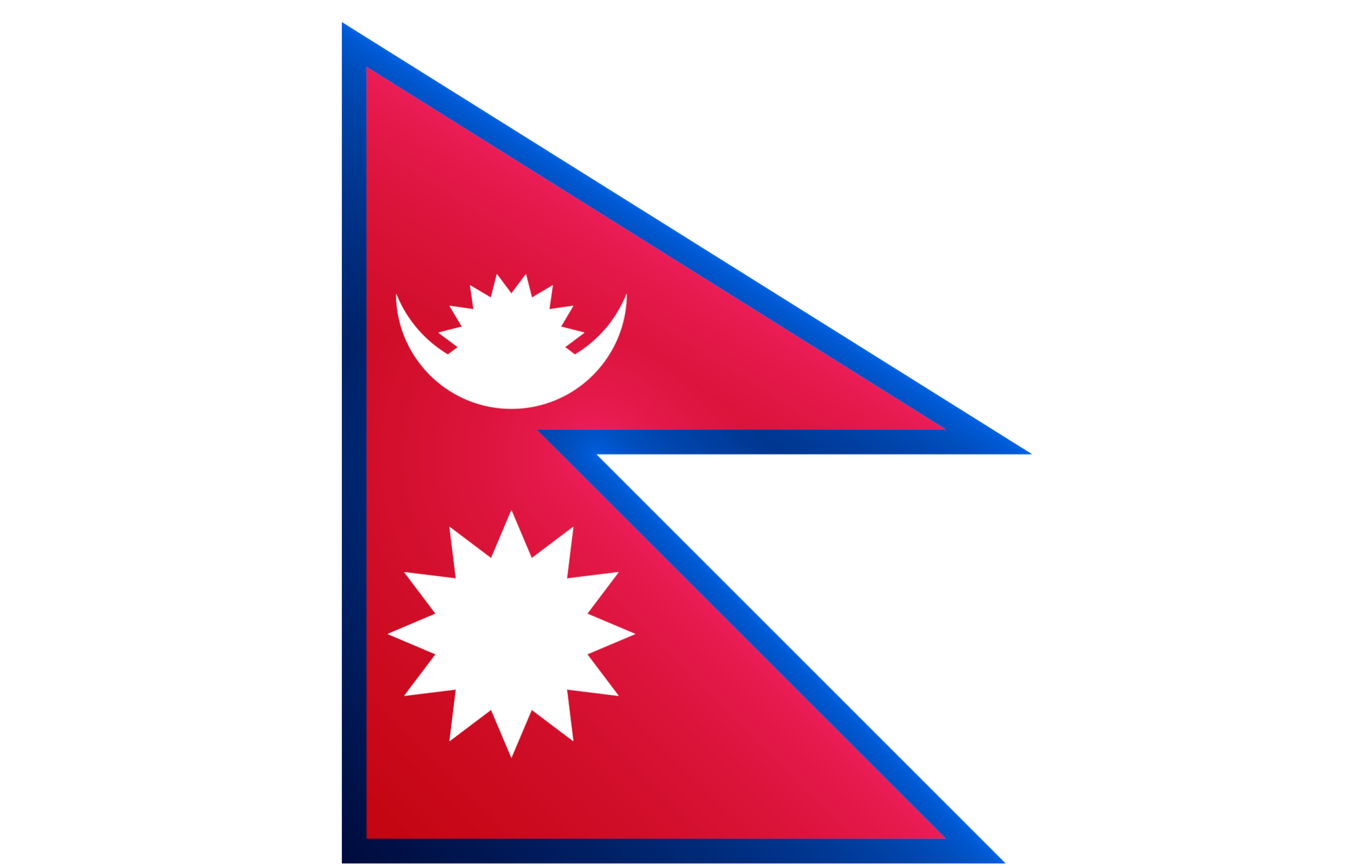
Another Himalayan contender for most unique flag is Nepal. First and foremost, for being the only triangular national flag in the world, which was a common trend for many Asian nations in the past. It features both the sun and moon representing longevity, with its red background and blue trim representing bravery and harmony respectively.
6. North Macedonia
North Macedonia’s flag is strikingly bright, featuring a starburst sun with eight rays stretching across a red field. The design is based on a symbol known as the Star of Verghina, originally used by Alexander the Great and his father Phillip II as their dynastic symbol. The sun is an ancient symbol, long associated with the region’s history. However, the Greeks consider claims to ancient Macedonian heritage by present-day (Slavic) Macedonians as appropriation. This already led to the Macedonians changing their flag slightly in 1995 and even their name from Macedonia to North Macedonia in 2019. Nevertheless, the bold design and history make it one of the most eye-catching flags in the world.

7. Papua New Guinea
From the tropics comes the flag of the humble nation of Papua New Guinea. It features a yellow Kumul or Raggiana bird-of-paradise and the Southern Cross constellation over the national colours of red and black placed diagonally. These colours are inspired by the colours of the flag of the German Empire, which colonised the country until 1919.

8. South Korea
The flag of South Korea, known as the Taegeukgi, is deceptively simple at first glance, but it’s packed with symbolism. At its centre sits the taegeuk, a red and blue yin-yang symbol representing balance in the universe - red for positive forces, blue for negative. Surrounding it are four black trigrams deriving from the I Ching, each representing a different natural element and cosmic principle: heaven, earth, fire, and water. The white background signifies peace and purity.

9. Sri Lanka
Sri Lanka’s flag is loaded with meaning. The golden lion holding a sword stands for bravery, and the native Sinhalese people, while the four leaves in the corners are symbols of Buddhism. The orange and green stripes represent the Tamil and Muslim communities, and the yellow border ties the whole flag together as a symbol of unity.

10. Tibet
While no longer officially recognised as a national flag since China’s annexation of the country in 1950, the Tibetan flag is a strong contender for world’s most unique. It features everything you want in a flag: snow lions, jewels representing Buddhist tenets, a snow-clad mountain, colourful rays and of course the sun. The six red rays blaze atop a blue sky, representing the six ancestral tribes of Tibet.

11. Uganda
Uganda’s flag is instantly recognisable with its bold black, yellow, and red stripes. At the centre stands a grey crested crane, the country’s national bird, known for its elegance and peaceful nature. The bird’s raised leg symbolises forward movement, while the colours represent the people, sunshine, and brotherhood.

12. Wales
The Welsh flag, based on the royal banner of Henry Tudor (Henry VII), features simple green and white strips dominated by a giant red dragon (Dragon of Cadwaladr). The green and white strips are the colours of the House of Tudor, while the red dragon has been a Welsh national symbol since at least the 5th century CE. Briton kings are said to have borrowed the image from Roman standards, which likely in turn borrowed it from the Dacians. However, a 9th-century legend from the Historia Brittonum claims that while building a fort, the Briton king Vortigen was approached by the legendary druid Merlin and told to dig up two dragons - one red and one white. The red dragon represented the Celtic Britons, while the white dragon represented the Anglo-Saxons. The two dragons engaged in a ferocious battle, whereby the red dragon defeated its opponent. Merlin henceforth prophesied that the Britons would expel the Anglo-Saxons from Britain.

Flag Poll
Image credits:
Academic Sources:


Comments