


Flags Pt. 2
- David Schrader
- Oct 31, 2025
- 14 min read

Updated: 16 minutes ago
Contents

Indigenous Flags
Many indigenous groups have their own distinct flags. Some were created to represent individual groups, while others were created as symbols of unified culture and identity. Here are some of the most well-known.
Aboriginal flag (Australia)
The Aboriginal flag was designed by Aboriginal artist Harold Thomas in 1970 as a symbol of collective Aboriginal identity. Black represents the people, yellow represents the sun, and red represents the earth. The flag was officially recognised in 1995 and is today flown alongside the Australian flag at most government institutions.


Māori flag (New Zealand)

Inspired by the Aboriginal flag, the national Māori flag was introduced in New Zealand in 1990. Each colour represents a realm in the Māori creation story: black represents Te Korekore (potential being), red Te Whai Ao (coming into being), and white Te Ao Mārama (the realm of being and light). It also features the native silver fern and a long white cloud, referencing the Maori name for New Zealand - Aotearoa (land of the long white cloud).

Native North American flags
Many Native American groups and tribal nations have their own flags, with no official flag collectively representing all of them.

Indigenous Andean (Mapuche) Flags

The Mapuche are a collection of Andean indigenous peoples from southern Chile and Argentina, who had retained a degree of independence from the Spanish (and later Chilean and Argentinian governments) up until the 19th century. The Mapuche are represented with various flags including the Wenufoye flag, introduced in Chile in 1992 and a flag representing the Mapuche and Tehuelche peoples in Argentina, introduced in 1995.

Sami (Northern Europe)
The Sami are a non-Indo-European indigenous people inhabiting Sápmi - an area covering the northern parts of Norway, Sweden, Finland and Russia. The Sami flag was created by Astrid Båhl, and adopted in 1986. It combines the traditional Sami colours, containing cosmic symbolism.


Supranational Flags
Flag of the European Union

The flag of Europe was adopted by the Council of Europe in 1955 and subsequently by its successor, the European Union. It features a simple blue background and twelve gold stars, representing the shared identity of Europeans and their shared values of unity, solidarity and harmony.

Flag of the African Union
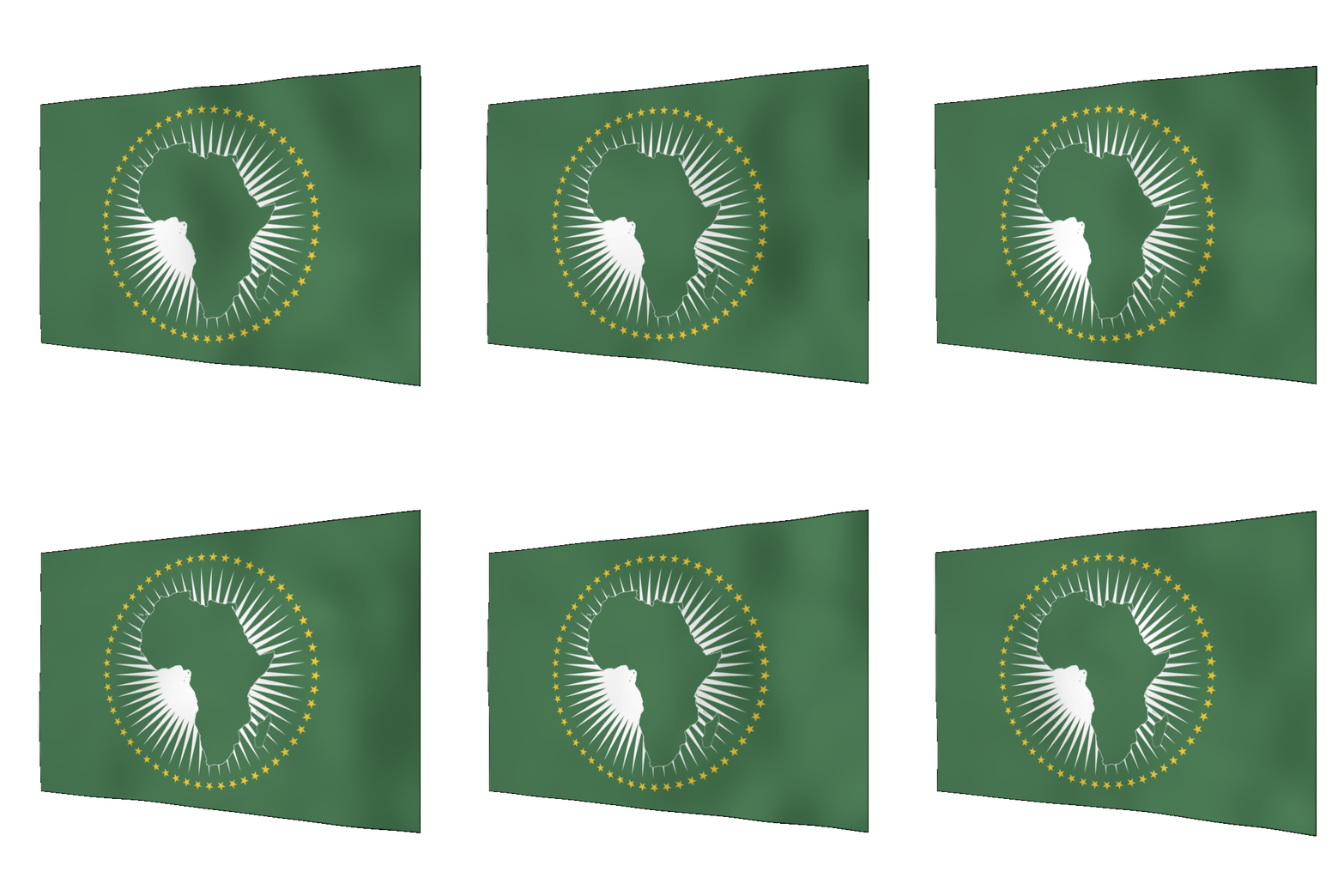
The flag of the African Union was adopted in 2010. It features a light green background representing hope, a map of the continent over a white sun and 55 gold stars representing its member states.

Flag of ASEAN
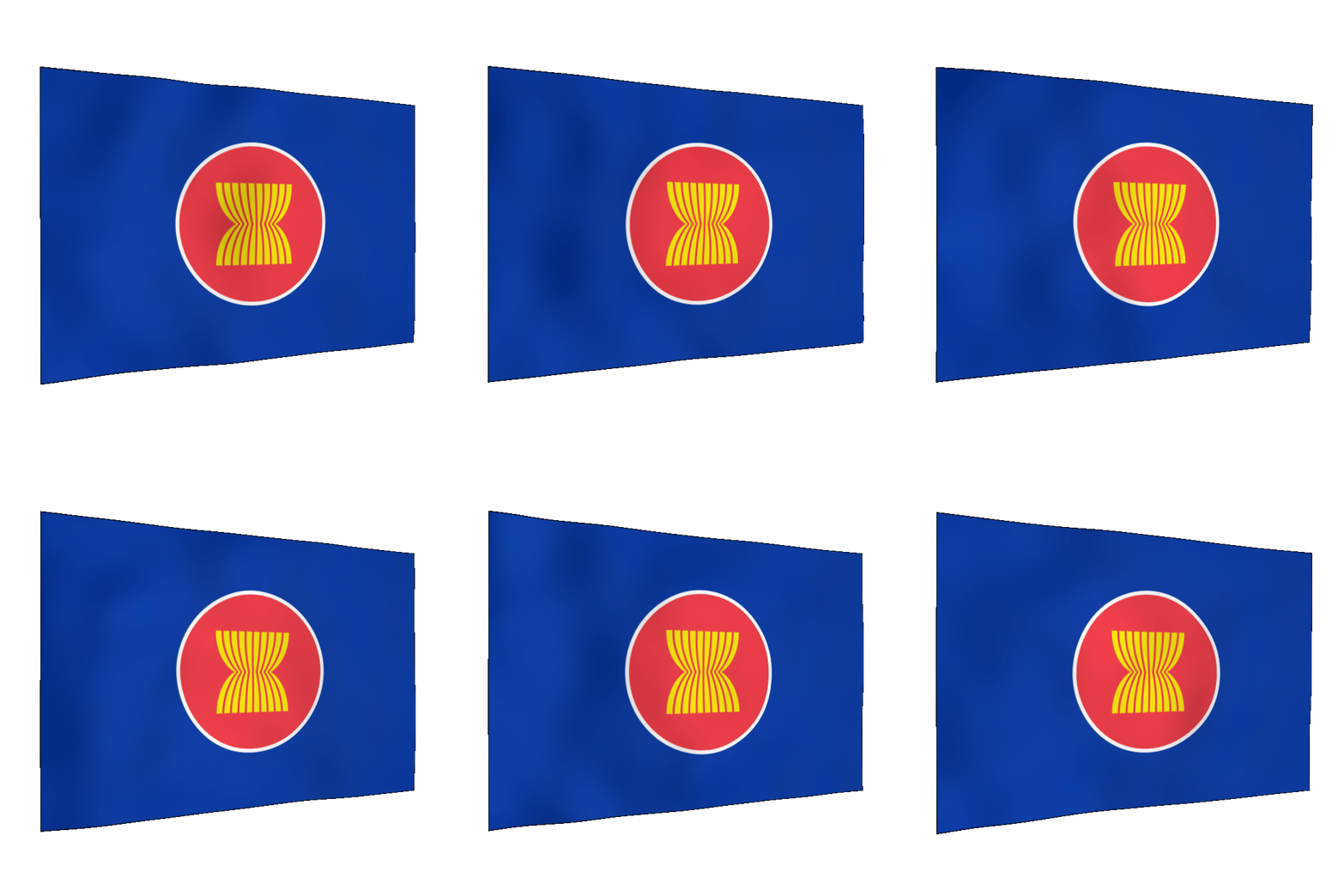
The flag of ASEAN (Association of South-East Asian Nations) features a blue background representing peace and stability. In the centre are ten yellow rice stalks bound together, representing its members united together. These are placed over a red circle with a white trim representing the unity of ASEAN, with the four colours together representing the main colours of the national flags of its members.

Flag of the United Nations
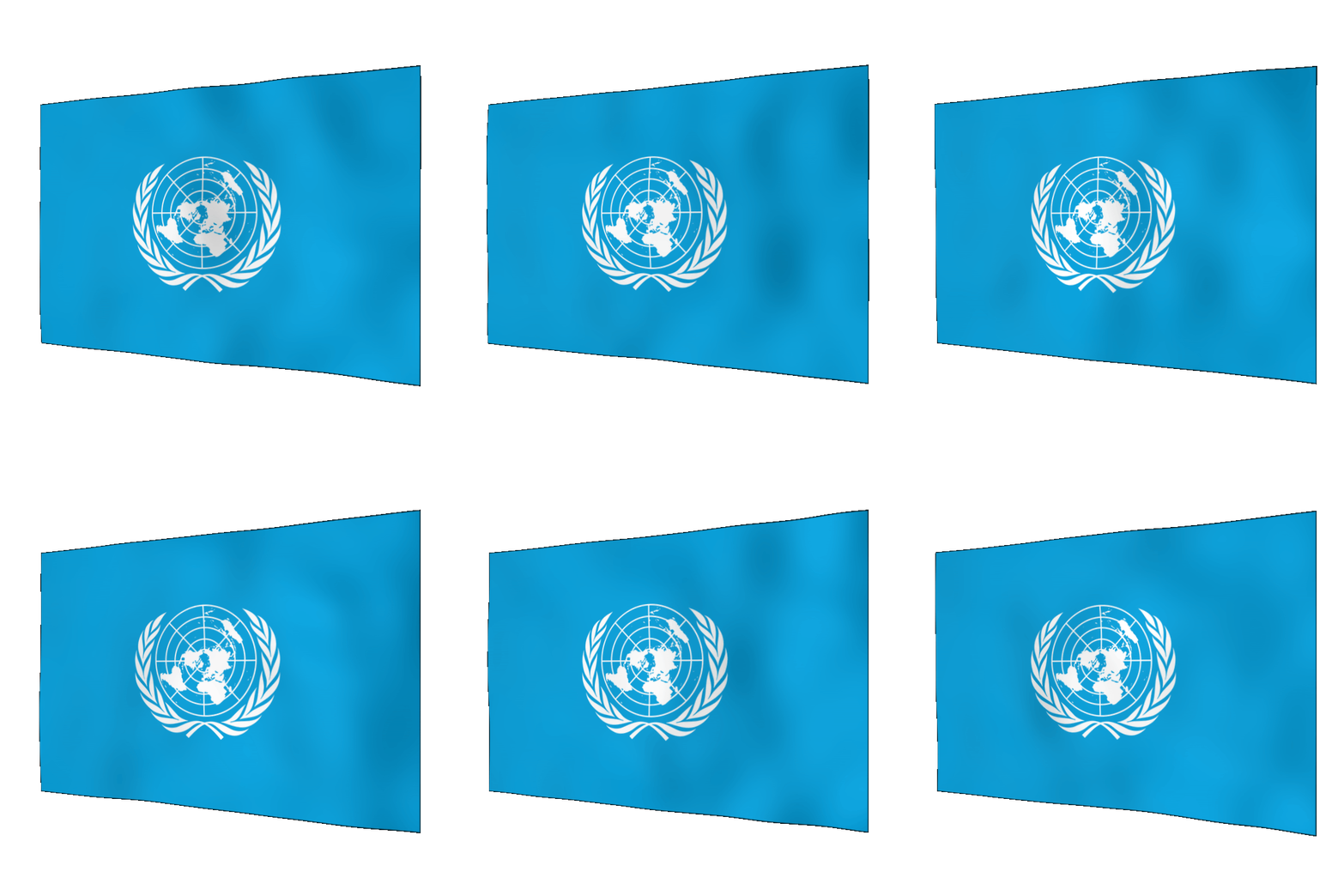
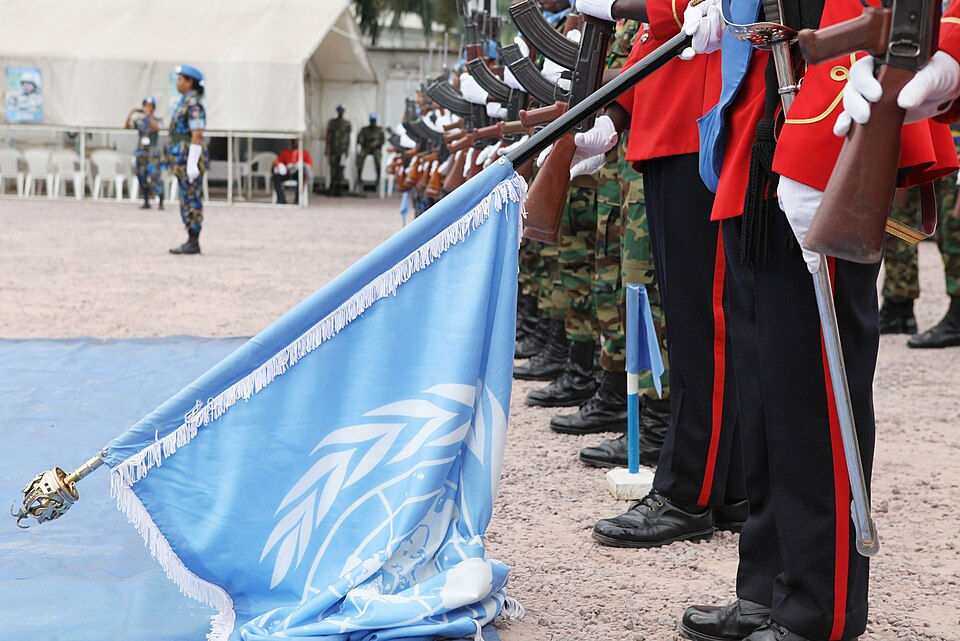
The UN flag was officially adopted in 1947 and features a light blue background as the opposite of the war colour red, with white olive branches representing peace, and an azimuthal equidistant projection of the globe representing the world’s nations.
Organisational Flags
Olympic flag

The Olympic flag is one of the most recognised symbols in the world, introduced at the 1914 Olympic Congress in Paris. It shows five interlocking rings in blue, yellow, black, green, and red on a white background, representing the unity of the five continents and the coming together of athletes from around the globe in friendship and competition.

The Red Cross/Crescent/Crystal Flags

The Red Cross flag is simple but instantly recognisable: a red cross on a white background. It’s a symbol of medical aid and neutrality, used to protect medical personnel and facilities in times of conflict. The organisation and its design were recognised in the First Geneva Convention of 1864. The flag is, in fact, an inverse Swiss flag, honouring the country where the organisation was founded and its commitment to neutrality.

Affiliate organisations of the Red Cross include the Red Crescent (for Muslim countries) and the Red Crystal (for secular use). Today, the symbol is used for medical treatment more generally.

North Atlantic Treaty Organisation (NATO)

The NATO flag is simple, yet symbolic, featuring a white compass rose on a dark blue field. The compass rose represents guidance and unity, while the four lines radiating from it symbolise the alliance’s commitment to collective defence. The blue background symbolises the Atlantic Ocean.

Religious Flags
Buddhism
The religion of Buddhism has its own dedicated flag, designed in Sri Lanka in 1880 by the Colombo Committee and formally adopted by the World Buddhist Congress in 1952. It comprises a colourful array of stripes, each one representing a core virtue of the faith: compassion (blue), balance (yellow), virtue (red), purity (white) and wisdom (orange). Buddhist Prayer flags featuring the mantra om mani padme hum are also commonly seen displayed in Buddhist countries.


Buddhist symbology is also featured on the national flags of Bhutan, Sri Lanka and Tibet (defunct).

Hinduism

While Hinduism doesn’t have its own dedicated flag, its symbology does feature on the flag of India. The colours of the Indian flag represent the religions of Hinduism (saffron or orange), Islam (green) and others such as Buddhism, Sikhism and Jainism (white). The Ashoka Chakra in the centre of the flag is the wheel of the law of dharma, with spiritual relevance for both Hinduism and Buddhism.

Christianity

Religious flags or banners have been around for centuries. For example, after the Christianisation of the Roman Empire, the chi-rho (☧), representing the first two letters of the Greek word for ‘Christ’ (XP), was often placed on imperial standards and later on church banners. During the Crusades, crusaders carried banners featuring the cross in various designs, one of which (the St. George’s Cross) inspired the English Flag. Christian orders such as the Knights Templar and the Teutonic Order likewise had their own flags.


As we explored earlier, the cross is today one of the most common symbols found on national flags, a symbol of the Christian heritage.

Judaism

The Star of David has been a Jewish symbol for more than a millennium, which made it an ideal choice for the flag of Israel when it declared independence in 1948.

Islam
As we explored earlier, many nations (15 in fact) feature the crescent moon on their flags (often combined with stars) as an enduring symbol of Islam. This symbol was introduced into the religion by the Ottomans, who borrowed it from an ancient Assyrian or Babylonian symbol of a similar fashion.
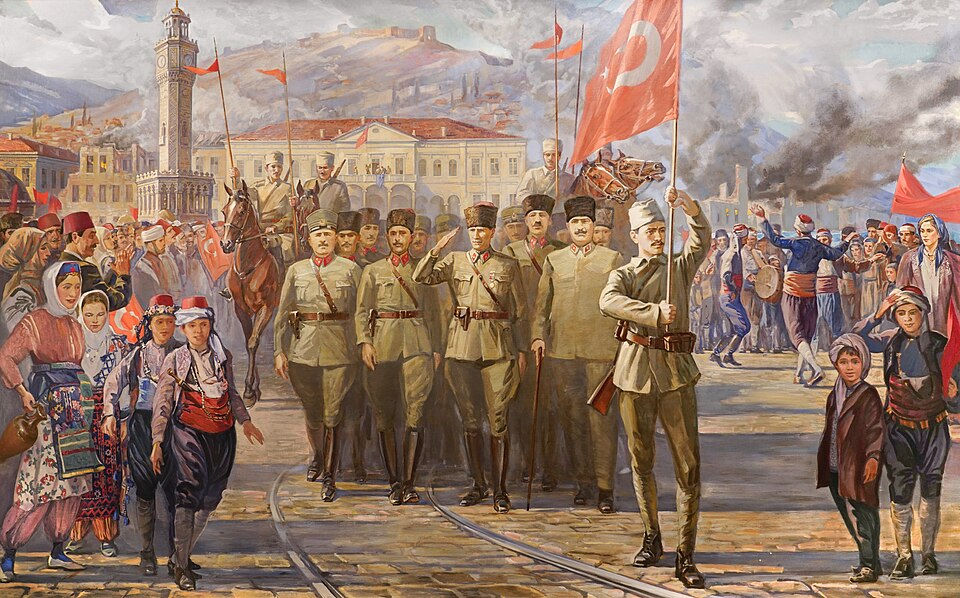
Political Flags
Flags are notoriously good at representing political views, encapsulating entire movements with as little as a single symbol or a few colours. Here are some of the most well-known worldwide.
LGBTQIA+ Flag

The LGBTQIA+ flag is an adaptation of the pride (rainbow flag), first created in 1978 by artist and activist Gilbert Baker to represent the queer community. Each colour of the original flag represented values such as life, healing, sunlight, nature, harmony, and spirit.

Over time, the design evolved to include variations that acknowledge diversity within the community, such as the inclusion of black and brown stripes to represent people of colour, as well as pink, light blue, and white to represent transgender identities, and purple ring on a yellow background to represent intersex and non-binary identities.
Black Lives Matter

The Black Lives Matter (BLM) flag emerged alongside the movement founded in 2013 to protest racial injustice and police brutality. It symbolises solidarity, resistance, and the demand for equality.

Gadsden Flag

The Gadsden flag, also known as the "Don't Tread on Me" flag, was designed by Christopher Gadsden in 1775 during the American Revolution. Featuring a coiled rattlesnake and the warning phrase, it symbolised resistance to tyranny and the colonies’ fight for independence. Today, it is primarily used as a symbol of the libertarian movement, but is also used across the political spectrum as a sign of defiance against government overreach.

Extremist Flags
Some of the most well-known and infamous flags are those of extremist ideological movements, whether political, religious or otherwise. These flags are highly controversial or considered symbols of hate and have been outlawed in many countries. Depictions are for informative purposes and are in no way an endorsement.
Fundamental Islamist Organisations
The news is often full of images of fundamentalist groups waving their flags in zealous fervour, the symbols on them showing their core beliefs. Some of the most well-known are those of fundamental Islamist organisations.


The flag of ISIS uses the black banner of the Abbasid Caliphate with the shahada (Islamic declaration of faith) in white and a white circular seal motif below.
Al-Qaeda also employs the black banner with the shahada in white - a version of the flag of Jihad.
The Taliban flag is the inverse: the white banner of the Ummayad Caliphate, representing purity, with the shahada written in black.
The flag of Hamas features the green banner of the Fatimid Caliphate, symbolising Islam and paradise, with the shahada and sometimes the Dome of the Rock in its emblem.
Hezbollah’s flag is bright yellow, chosen for visibility and differentiating it as a Shia movement, with its logo in green: a stylised rifle raised amid Arabic script, representing militant resistance, alongside Qur’anic references. All of these groups follow the principle of militant Jihad and have been responsible for the use of terror and violence to achieve their ideological aims.

Confederate Flag (US)

The Confederate (Rebel) Flag was originally used as the battle flag of the Confederate States of America during the American Civil War (1861–1865). It features a red field with a blue saltire (diagonal cross) edged in white, decorated with thirteen white stars representing the states of the Confederacy. Today, it is often associated with slavery, segregation, and white supremacist movements, although many defend its use as a symbol of Southern heritage.

Rising Sun Flag

The Rising Sun flag was used historically by the Imperial Japanese Army and Navy and features a red sun with 16 red rays extending outward on a white field. It symbolises sunlight, energy, and the Emperor.

Today, the flag is still used by the Japanese military, though it remains highly controversial in parts of Asia due to its association with ultranationalism, Japanese militarism and atrocities committed in WWII.
Nazi Flag


The Nazi flag was adopted by the National Socialist German Workers' Party in the 1920s and became Germany’s national flag under Nazi rule (1933–1945). It features a black swastika (an ancient symbol in many cultures) in a white circle on a red field. The red symbolised the social idea of the movement, white represented nationalism, and the swastika was used as a symbol of Aryan identity and racial ideology. Today, the flag is banned or restricted in many countries due to its association with hate, genocide, and World War II.
Socialist/Communist Flag

The flag of socialism is a plain red banner, which became prominent during the 19th-century labour movements and revolutions. The colour is meant to symbolise the blood of workers and revolutionaries. Flags of communist or socialist states have, therefore, traditionally used the colour heavily.

The flag of the Soviet Union, adopted in 1922, is undoubtedly the most recognisable of these, with its infamous gold hammer and sickle. The hammer represented the industrial workers, while the sickle represented the peasantry. The star represented the party leading the people. This design was the inspiration for many other communist and socialist countries (many now defunct). Today, flags related to communism are offensive to many people and especially controversial in countries that suffered under Communist regimes in the past.
Antifa Flag

Antifa (anti-fascist) is a loose communist/anarchist movement with roots in Germany, openly and often violently opposing right-wing extremism. The Antifa flag usually features two overlapping red and black flags on a white or black background.

The red flag represents socialism or communism, while the black flag represents anarchism. Like many political flags, it has no official status, but is a widely recognised political symbol. It is seen as controversial by many due to a tendency within the movement towards violence and civil disobedience.
Flags For Communication
Racing Flags
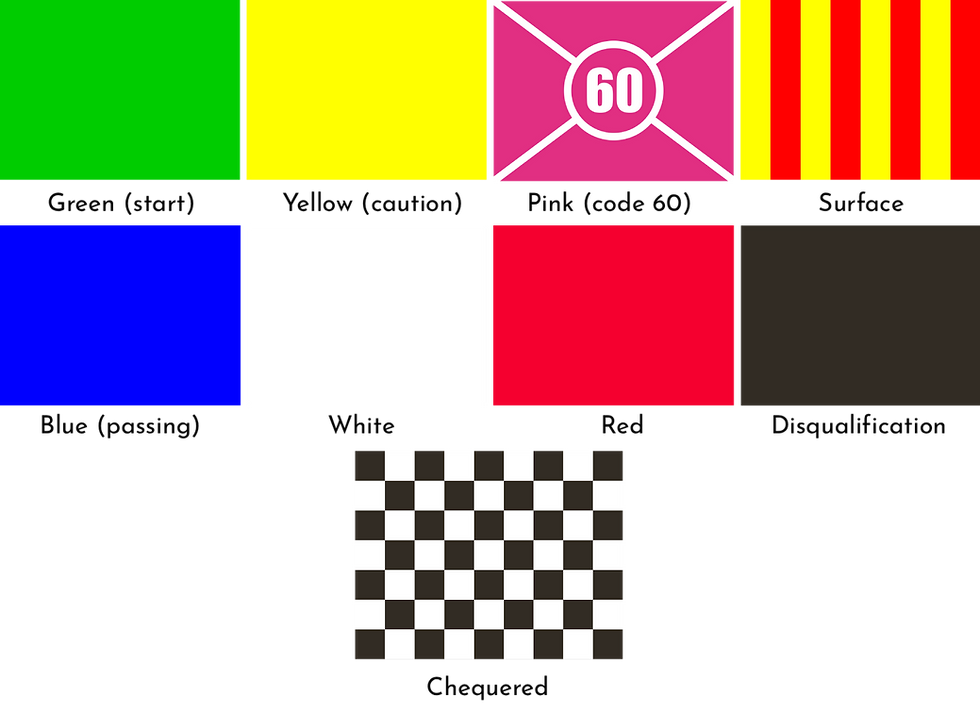
The system of motor racing flags developed in the early 20th century as a way to communicate with drivers before modern radios. The most famous, the chequered flag, is believed to have first appeared in the Vanderbilt Cup in 1906, and became standard by the 1920s to signal the finish. Its black-and-white pattern was chosen for maximum visibility against the dust and crowds of early racetracks. Since then, the chequered flag has become an enduring global symbol of racing.

White Flag (Surrender)
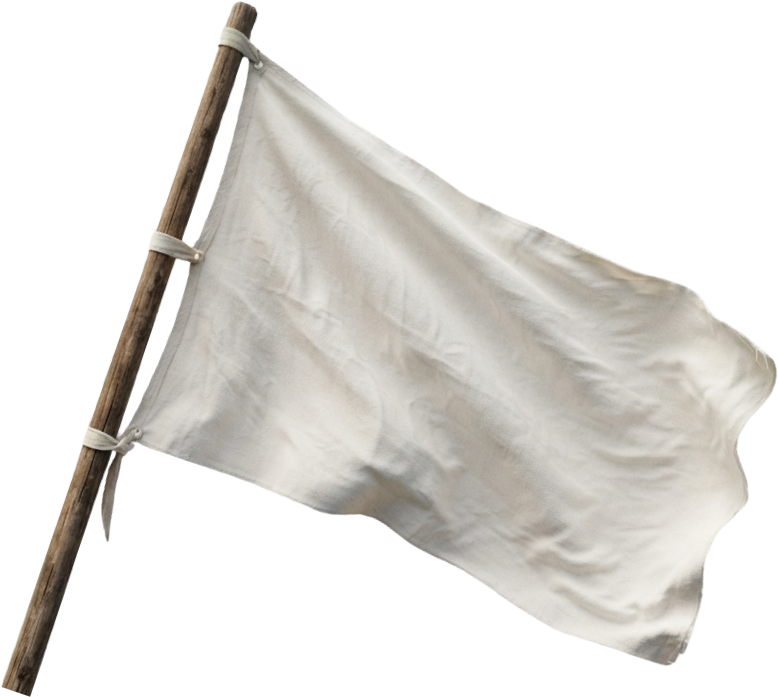
The white flag has long been used as a signal of surrender
or truce in warfare, and while its exact origins are unclear, references to it go as far back as the Roman historian Livy in the 3rd century BCE. During the Second Punic War between Rome and Carthage, the Carthaginians signalled their desire for peace with olive branches (long associated with peace and truce in the Mediterranean) adorned with strips of white wool. Other records show Mediterranean peoples using white cloth to request a truce. This may have been related to the use of white clothing when worshipping gods to signal reverence and goodwill. The practice spread through Europe in the Middle Ages, and by the 17th century, it had become a standardised symbol of surrender and truce, recognised internationally.

Maritime Flags
Maritime flags have been used for centuries to identify ships, show national allegiance, and communicate at sea. From simple banners in ancient fleets to the elaborate ensigns of the Age of Sail, they marked a ship’s country, commander, or mission. Today, navies fly national ensigns, jacks, and signal flags, following international codes to convey orders, warnings, and messages, blending practical communication with symbolism and ceremony.
Naval ensigns


Jolly Roger (Pirate Flag)
The Jolly Roger is the famous pirate flag with a white skull and crossbones. Pirates in the 17th and 18th centuries often flew a black flag to intimidate their targets and signal that they were outside the law. Its bold design warned ships to surrender without a fight, promising violence if ignored. The name Jolly Roger is of uncertain origin, but there are several theories. One is that it relates to “Old Roger”, a nickname for the devil in 17th–18th century England. Another is that it derives from the French phrase “joli rouge” (jolly red). Pirates would sometimes fly a red flag instead of a black flag to indicate that no quarter would be given to the crew if they chose to fight rather than surrendering.


Final Remarks
Flags are just one of the many ways that humans communicate symbolically. They are a tool with which we can express our identities, whether it be our nationality, religion or ideology, represent organisations and movements and communicate without language. The sheer range of designs is itself a marvel, and even more so when you understand that each one has its own unique origin. So, the next time you see a flag, ask yourself what story might be hiding behind it. Chances are, it’s a lot more than you think.
Image Credits:
Fig. 1: @Dicklyon, Australian Aboriginal flag on Sydney Harbour Bridge, Wikimedia Commons, <https://commons.wikimedia.org/wiki/File:Australian_Aboriginal_flag_on_Sydney_Harbour_Bridge.jpg> [CC BY 4.0, accessed August 2026]
Fig. 2: Stuart Grange, Tino rangatiratanga flag on Harbour Bridge, Wikimedia Commons, <https://commons.wikimedia.org/wiki/File:Tino_rangatiratanga_flag_on_Harbour_Bridge.jpg> [CC BY-SA 3.0, accessed August 2026]
Fig. 3: @DiscoA340, Iroquois Confederacy flag at the National Museum of the American Indian, Wikimedia Commons, <https://commons.wikimedia.org/wiki/File:National_Museum_of_the_American_Indian_(21_September_2023)_16.jpg> [CC BY-SA 4.0, accessed August 2026]
Fig. 4: @Lufke, Ceremony in Punta Cuevas 58, Wikimedia Commons, <https://commons.wikimedia.org/wiki/File:Ceremony_in_Punta_Cuevas_58.JPG> [CC BY-SA 3.0, accessed August 2026]
Fig. 5: @Yupik, Sääʹm lipp da Heʹlssen gååradmuʹzei 6TÄʹLVV2025, Wikimedia Commons, <https://commons.wikimedia.org/wiki/File:S%C3%A4%C3%A4%CA%B9m_lipp_da_He%CA%B9lssen_g%C3%A5%C3%A5radmu%CA%B9zei_6T%C3%84%CA%B9LVV2025.jpg> [CC BY-SA 4.0, accessed August 2026]
Fig. 6: @VirtuallyLondonBecky, Anti - Brexit protest on Cockspur Street, Wikimedia Commons, <https://commons.wikimedia.org/wiki/File:Brexit_protest_cockspur_street.jpg> [CC BY-SA 2.0, accessed August 2026]
Fig. 7: Post of Republic of the Congo (Brazzaville), Stamp of Congo, Republic (Brazzaville) - 1962, Wikimedia Commons, <https://commons.wikimedia.org/wiki/File:Stamp_of_Congo,Republic(Brazzaville)_-1962-Colnect_516607-_The_1st_Anniversary_of_the_Union_of_African_and_Malagasy_Sta.jpeg> [Public domain, accessed August 2026]
Fig. 8: Indonesian Embassy in Colombo, ASEAN Flag raising in Colombo, Sri Lanka, Wikimedia Commons, <https://commons.wikimedia.org/wiki/File:ASEAN_Flag_raising_in_Colombo,_Sri_Lanka.jpg> [Public domain, accessed August 2026]
Fig. 9: MONUSCO Photos, UN Peacekeepers Day celebration in the DR Congo, Wikimedia Commons, <https://commons.wikimedia.org/wiki/File:UN_Peacekeepers_Day_celebration_in_the_DR_Congo_(8879872657).jpg> [CC BY-SA 2.0, accessed August 2026]
Fig. 10: U.S. Army, A scene from the Rio 2016 Olympic Games Opening Ceremony, Wikimedia Commons, <https://commons.wikimedia.org/wiki/File:A_scene_from_the_Rio_2016_Olympic_Games_Opening_Ceremony_(28827502155).jpg> [CC BY 2.0, accessed August 2026]
Fig. 11: Sisters of Mercy at the Battle of Gravelotte, Wikimedia Commons, <https://commons.wikimedia.org/wiki/File:Sisters_of_Mercy_at_the_Battle_of_Gravelotte.jpg> [Public domain, accessed August 2026]
Fig. 12: @Trougnouf, Big NATO flag hanging under Cinquantenaire arch, Wikimedia Commons, <https://commons.wikimedia.org/wiki/File:Big_NATO_flag_hanging_under_Cinquantenaire_arch.jpg> [CC BY-SA 4.0, accessed August 2026]
Fig. 13: Basile Morin, Exterior facade of Kannon Hall Buddhist temple with Goshikimaku Buddhist flags Ninna-ji Kyoto Japan, Wikimedia Commons, <https://commons.wikimedia.org/wiki/File:Exterior_facade_of_Kannon_Hall_Buddhist_temple_with_Goshikimaku_Buddhist_flags_Ninna-ji_Kyoto_Japan.jpg> [CC BY-SA 4.0, accessed August 2026]
Fig. 14: Government of India, President of Bharat, Smt. Droupadi Murmu awards Ashoka Chakra to Astronaut Shubhanshu Shukla, Wikimedia Commons, <https://commons.wikimedia.org/wiki/File:President_of_Bharat,_Smt._Droupadi_Murmu_awards_Ashoka_Chakra_to_Astronaut_Shubhanshu_Shukla.jpg> [Open Government Licence - India, accessed August 2026]
Fig. 15: 1920 East Prussian Plebiscite Postcard, Wikimedia Commons, <https://commons.wikimedia.org/wiki/File:1920_East_Prussian_Plebiscite_Postcard.jpg> [Public domain, accessed August 2026]
Fig. 16: Ido Kenan, Israeli flag IDF pride - Zahal IDF on parade, Wikimedia Commons, <https://commons.wikimedia.org/wiki/File:Israeli_flag_IDF_pride_-_Zahal_IDF_on_parade.jpg> [CC BY 2.5, accessed August 2026]
Fig. 17: Dosseman, Atatürk portrait in Ankara, Wikimedia Commons, <https://commons.wikimedia.org/wiki/File:20180108_Atat%C3%BCrk_2769_(38931765345)-cropped_REST.jpg> [CC BY-SA 4.0, accessed August 2026]
Fig. 18: Michael Henderson, Up North Pride 2017, Traverse City, MI, USA - June 25 2017, Wikimedia Commons, <https://commons.wikimedia.org/wiki/File:Up_North_Pride_2017,_Traverse_City,_MI,_USA_-_June_25_2017.jpg> [CC BY 2.0, accessed August 2026]
Fig. 19: Elvert Barnes, Black Lives Matter Plaza, Wikimedia Commons, <https://commons.wikimedia.org/wiki/File:BLACK_LIVES_MATTER_PLAZA_IMG_6518_(50102529888).jpg> [CC BY-SA 2.0, accessed August 2026]
Fig. 20: Lorie Shaull, Flags at rally against gun control at the Minnesota State Capitol, Wikimedia Commons, <https://commons.wikimedia.org/wiki/File:Flags_at_rally_against_gun_control_at_the_Minnesota_State_Capitol.jpg> [CC BY-SA 4.0, accessed August 2026]
Fig. 21: @Faldi00, Flag of Islamic Emirate of Afghanistan at Afghan Embassy in Moscow 2025, <https://commons.wikimedia.org/wiki/File:Flag_of_Islamic_Emirate_of_Afghanistan_at_Afghan_Embassy_in_Moscow_2025.jpg> [CC BY 4.0, accessed August 2026]
Fig. 22: Panoramio user, Confederate Soldiers in Mt. Olivet, Wikimedia Commons, Wikimedia Commons, <https://upload.wikimedia.org/wikipedia/commons/4/48/Confederate_Soldiers_in_Mt.Olivet-_panoramio.jpg> [CC BY 3.0, accessed August 2026]
Fig. 23: Flag of Japan Postcard 1910 Exhibition, Wikimedia Commons, <https://commons.wikimedia.org/wiki/File:Flag-of-Japan-Postcard-1910-Exhibition.png> [Public domain, accessed August 2026]
Fig. 24: Heinrich Hoffmann, Reichsparteitag Nürnberg postcard, Wikimedia Commons, <https://commons.wikimedia.org/wiki/File:Reichsparteitag-N%C3%BCrnberg_Ansichtskarte_N%C3%BCrnberger_Burg_SS_Hakenkreuz_Fahnen_Wappen_Spielmannszug_Paradetrommel_NSDAP_Propaganda_Nazi_Party_Nuremberg_Rally_1936_Postcard_Photo-Hoffmann_Munich_36-6_Uncredited_artist_No_known_copyright.jpg> [Public domain, accessed August 2026]
Fig. 25: RIA Novosti Archive, USSR team on opening of 1980 Summer Olympics, Wikimedia Commons, <https://commons.wikimedia.org/wiki/File:USSR_team_on_opening_of_1980_Summer_Olympics.jpg> [CC BY-SA 3.0, accessed August 2026]
Fig. 26: @Oompje, Antifa Hammer and Sickle, Wikimedia Commons, <https://commons.wikimedia.org/wiki/File:Antifa_hammer_and_sickle.jpg>[CC BY-SA 3.0, accessed August 2026]
Fig. 27: @Albe, Red and yellow flag, Wikimedia Commons, <https://commons.wikimedia.org/wiki/File:Red_and_yellow_flag.jpg> [CC BY-SA 3.0, accessed August 2026]
Fig. 28: John Trumbull, Surrender of Lord Cornwallis, Wikimedia Commons, <https://commons.wikimedia.org/wiki/File:Surrender_of_Lord_Cornwallis.jpg> [Public domain, accessed August 2026]
Fig. 29: @Gadfium, Young Endeavour under sail, Wikimedia Commons, <https://commons.wikimedia.org/wiki/File:Young_Endeavour-03%2B_(511631842).jpg> [CC BY 2.0, accessed August 2026]
Fig. 30: @Hajor, Jolly Roger at Portsmouth Historic Dockyard, Wikimedia Commons, <https://commons.wikimedia.org/wiki/File:Jolly_Roger_at_Portsmouth_Historic_Dockyard.jpg> [CC BY-SA 3.0, accessed August 2026]
Academic Sources:
Books
Elgenius, Gabriella, 'Chapter 2: National Flag Origins: Religion, Revolution and Rivalry’, Symbols of Nations and Nationalism, Springer Link Nature, 2011, pp. 27-56 <https://link.springer.com/chapter/10.1007/978-0-230-31704-8_3>
Websites:
‘A colorful MSHFA exhibit chronicles the ever-evolving history of racing flags’, Racer, https://racer.com/2022/06/02/a-colourful-mshfa-exhibit-chronicles-the-ever-evolving-history-of-racing-flags?utm_source=chatgpt.com [accessed April 2026]
‘Antifa symbol’, Symbols, https://www.symbols.com/symbol/antifa-symbol [accessed April 2026]
‘Aboriginal flag’, AIATSIS, https://aiatsis.gov.au/explore/aboriginal-flag [accessed April 2026]
‘European flag’, European Union, https://european-union.europa.eu/principles-countries-history/symbols/european-flag_en [accessed April 2026]
‘Flag of ASEAN’, ASEAN, https://asean.org/asean-flag/ [accessed April 2026]
‘Flag of the African Union’, African Union, https://au.int/en/about/symbols [accessed April 2026]
‘Gadsden flag’, Encyclopædia Britannica, https://www.britannica.com/topic/Gadsden-flag [accessed April 2026]
‘German Nazi Swastika Flag’, Smithsonian Institution, https://www.si.edu/object/nmah_1357427 [accessed April 2026]‘German Nazi Swastika Flag’, Smithsonian Institution, https://www.si.edu/object/nmah_1357427 [accessed April 2026]
‘Hammer & sickle: the Soviet symbol and what it means’, History Extra, https://www.historyextra.com/period/20th-century/hammer-sickle-communism-soviet-symbol-why/ [accessed April 2026]
‘Historic flags of Islam’, CRW Flags, https://www.crwflags.com/fotw/flags/rel-ishi.html [accessed April 2026]
‘History of Christian flags’, Wikiwand, https://www.wikiwand.com/en/articles/History_of_Christian_flags [accessed April 2026]
‘History of the emblems’, International Committee of the Red Cross, https://www.icrc.org/en/article/history-emblems [accessed April 2026]
‘How Confederate battle flag became symbol racism’, National Geographic, https://www.nationalgeographic.com/history/article/how-confederate-battle-flag-became-symbol-racism [accessed April 2026]
‘Islamic flags’, CRW Flags, https://www.crwflags.com/fotw/flags/rel-is.html [accessed April 2026]
‘Japan rising sun flag history olympic ban south korea’, The Guardian, https://www.theguardian.com/commentisfree/2019/nov/01/japan-rising-sun-flag-history-olympic-ban-south-korea [accessed April 2026]
‘Jolly Roger’, Encyclopædia Britannica, https://www.britannica.com/topic/Jolly-Roger [accessed April 2026]
‘Mapuche’, Vexillology Wiki, https://vexillology.fandom.com/wiki/Mapuche [accessed April 2026]
‘National flag’, Cultural India, https://www.culturalindia.net/national-symbols/national-flag.html [accessed April 2026]
‘Nautical flag origins and history’, American Sailing, https://americansailing.com/articles/nautical-flags-origins-uses-meanings/ [accessed April 2026]
‘NATO history emblem’, NATO, https://web.archive.org/web/20160912193756/http://www.nato.int/history/nato-history-emblem.html [accessed April 2026]
‘Olympic flag’, International Olympic Committee, https://www.olympics.com/ioc/olympic-flag [accessed April 2026]
‘Our history’, Black Lives Matter, https://blacklivesmatter.com/our-history/ [accessed April 2026]
‘Sami flag’, Nordic Co-operation, https://www.norden.org/en/information/sami-flag [accessed April 2026]
‘Star of David’, Encyclopædia Britannica, https://www.britannica.com/topic/Star-of-David [accessed April 2026]
‘The Buddhist flag’, BuddhaNet, https://www.buddhanet.net/e-learning/history/b_flag/ [accessed April 2026]
‘The meaning of prayer flags’, Mountain Kingdoms, https://www.mountainkingdoms.com/blog/article/the-meaning-of-prayer-flags [accessed April 2026]
‘Tino rangatiratanga flag’, New Zealand Ministry for Culture and Heritage, https://www.mch.govt.nz/our-work/flags-anthems-and-emblems/new-zealand-flag/tino-rangatiratanga-flag [accessed April 2026]
‘UN emblem and flag’, United Nations, https://www.un.org/en/about-us/un-emblem-and-flag [accessed April 2026]
‘When did the white flag become associated with surrender?’, History.com, https://www.history.com/articles/when-did-the-white-flag-become-associated-with-surrender [accessed April 2026]
‘Winka’, Lofdigital, https://web.archive.org/web/20080109103543/http://www.lofdigital.org.ar/winka/?p=58 [accessed April 2026]


Comments